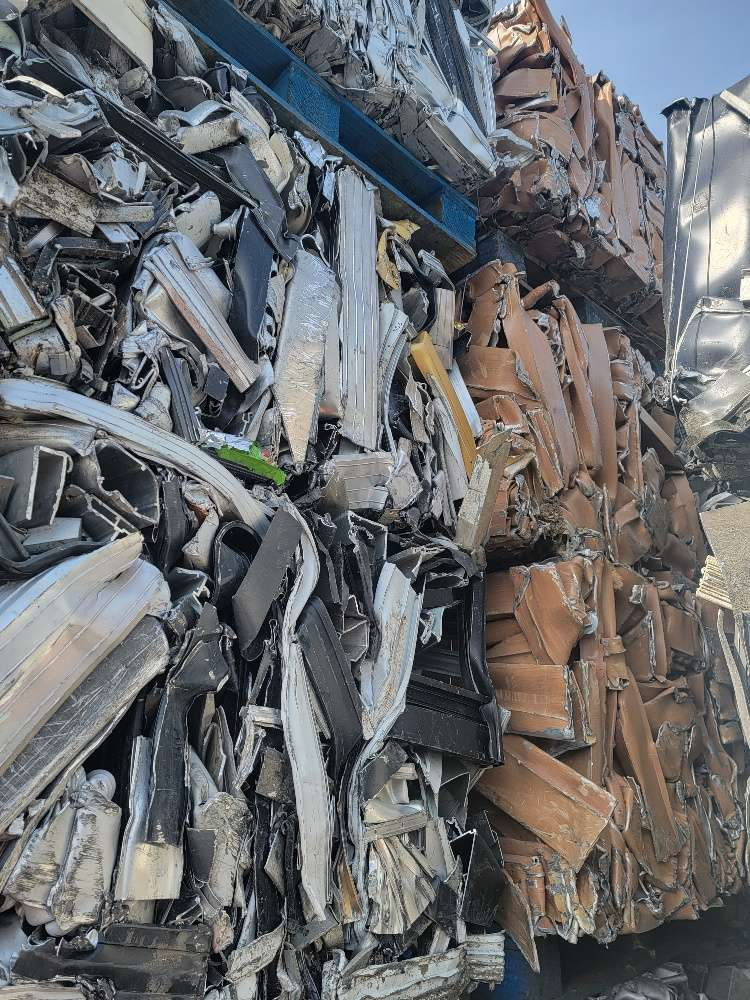
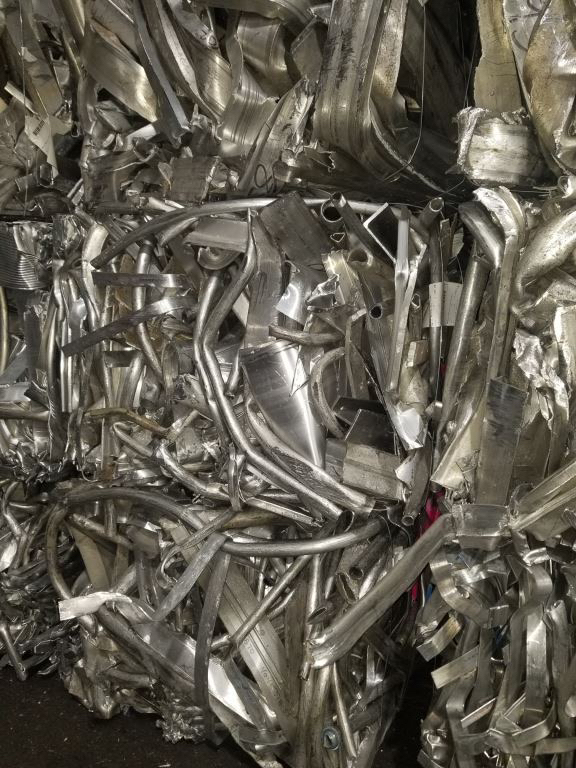
6063 extrusion - old painted

Scrap Wiki

Aluminum alloy profiles, also known as aluminum profiles or aluminum sections, refer to long materials formed in various cross-sectional shapes through extrusion or other processing methods using aluminum alloys. The common aluminum alloy grades used for profiles are 6063, 6061, and some 7075. Due to the primary processing method being extrusion, scrap produced from these profiles is often referred to as "extrusion" in English-speaking environments. Aluminum alloy profiles can come in various shapes, such as round, square, C-shaped, T-shaped, L-shaped, etc., and can be customized according to different application needs. Their main uses are in doors, windows, and edge sealing.
Scrap from aluminum alloy profiles, as the name suggests, refers to waste material produced during the manufacturing process of aluminum profiles or waste material formed from used aluminum profiles that are no longer serviceable.
Aluminum alloy profiles are formed by melting aluminum with other metals (such as copper, zinc, magnesium, manganese, etc.) and then shaping the material into specific forms and sizes through extrusion, casting, and other methods. These profiles are widely used in industries such as construction, automotive, aerospace, electrical goods, among others. Consequently, scrap from aluminum profiles can include cut-off edges, shavings, and filings from the production process, as well as profiles that have been discarded due to damage or aging during use. These scraps contain a significant amount of recyclable aluminum alloy, giving them economic value. Through proper recycling and reuse, resources can be significantly conserved, production costs can be reduced, and environmental protection can be enhanced.
In ISRI naming conventions, aluminum alloy profiles have three names: Tata/Toto/Tutu, which differ in the following ways: Tata consists purely of one grade (usually 6063), can have edges and oxidation, but no impurities or paint. Toto can comprise up to 10% of grade 6061 and 10% painted profiles. Tutu consists of profiles of one grade, without edges and oxidation.
Common Classification

The classification of scrap from aluminum profiles mainly depends on their alloy grade, packaging, application area, and processing method. Below are some common classification methods:
1. By Composition: Such as 6063 profile scrap, 6061 profile scrap, and scrap from other grades of aluminum alloy profiles. The most common profile material for windows and doors is 6063 aluminum, followed by 6061 aluminum. Generally, high-end window and door materials use a higher proportion of 6061.
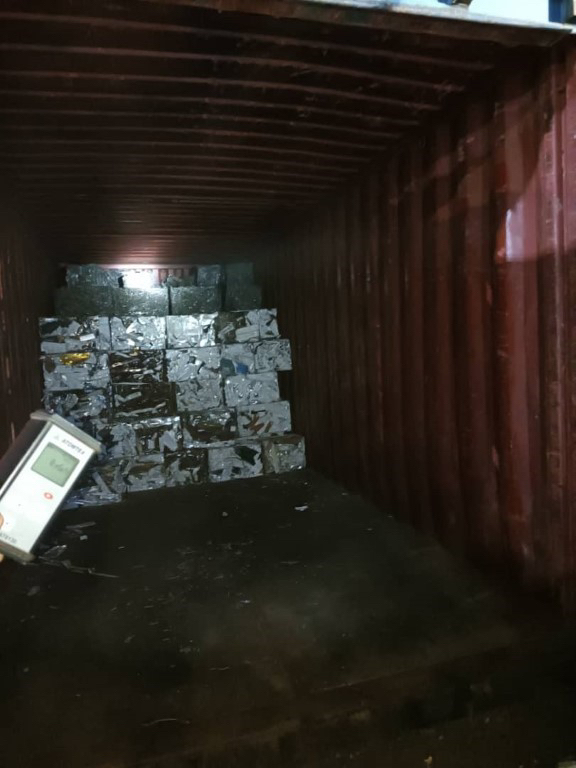
2. By Packaging: Such as loose profile scrap, compacted profile scrap, and bundled profile scrap.
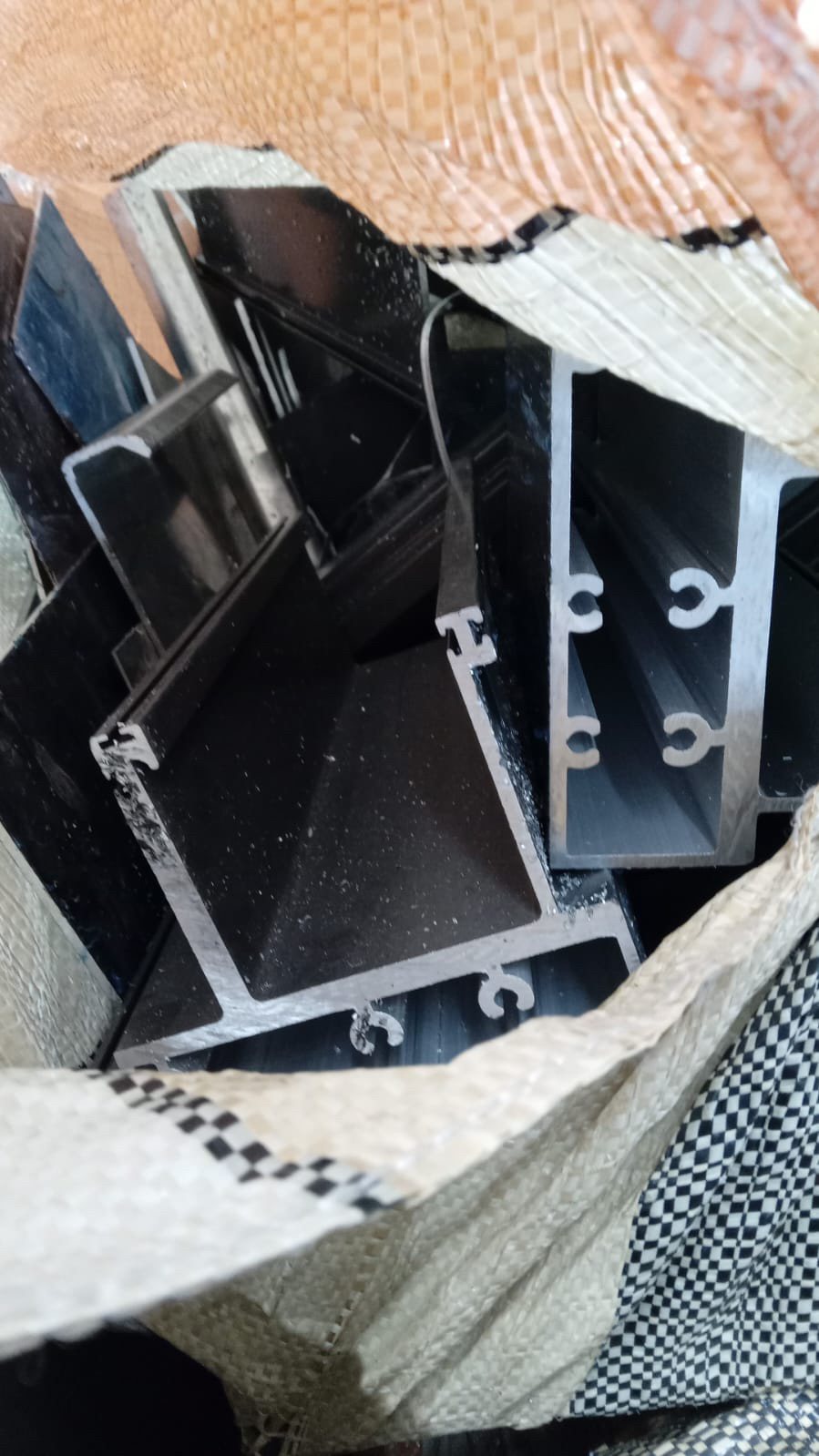
- Loose can refer to cut and boxed, bagged, or completely loose.
- The difference between bundled and compacted is that bundled is generally looser, while compacted is very dense.
3. By Application Area: Such as construction aluminum profile scrap, automotive aluminum profile scrap, aerospace aluminum profile scrap, etc.
4. By Processing Method: Such as crushed aluminum profile scrap, sorted aluminum profile scrap, polished aluminum profile scrap, etc.
5. By Alloy Surface: Such as unpainted (white or bare) aluminum profile scrap, painted aluminum profile scrap, mixed aluminum profile scrap, etc.
Each classification method has its own characteristics and application scenarios, and the appropriate classification method can be chosen based on actual needs.

Common Sources

The primary sources of scrap from aluminum alloy profiles include the following:
1. Manufacturing Process: During the production or use of aluminum profiles, scrap such as cut-off edges, shavings, and filings are generated. These are significant sources of aluminum profile scrap.
2. Construction Waste: In construction and renovation projects, aluminum profiles that are left over or damaged can become scrap.
3. End-of-Life Products: Aluminum profile products that have reached the end of their service life or are damaged beyond repair, such as old doors, windows, furniture, car parts, electronic devices, etc., are also significant sources of aluminum profile scrap.
These scraps contain substantial amounts of recyclable aluminum alloy. Through proper recycling and reuse, resources can be significantly conserved, production costs can be reduced, and environmental protection can be enhanced.
The production of scrap from aluminum profiles is mainly concentrated in regions with developed industries and large aluminum consumption. Globally, China is the world's largest producer and consumer of aluminum and aluminum alloys, and therefore, it also generates a significant amount of industrial scrap from aluminum profiles. Particularly in the Pearl River Delta, Yangtze River Delta, and Bohai Bay regions, where industry is well-developed, the growth of construction, automotive manufacturing, electronics manufacturing, and other industries results in substantial amounts of scrap from aluminum profiles. In the United States, Europe, Japan, and South Korea, the automotive industry, aerospace industry, electronics industry, and other high-end manufacturing sectors have a massive demand for aluminum, leading to the generation of large quantities of scrap from aluminum profiles.

Value Points

To increase or assess the value of a batch of aluminum profile scrap, consider the following steps:
1. Sorting and Cleaning: Sort the collected aluminum scrap by different series or grades, which facilitates subsequent recycling. Additionally, remove as many foreign substances as possible from the aluminum alloy, such as iron screws and other attachments, rubber strips, seals, etc. This can increase the value of the aluminum profile scrap.
2. Gauge Thickness: The thickness of the profile directly determines its metal recovery rate, making it a key factor in determining its value. Pure aluminum profiles without any impurities and thicknesses of 1 to 3mm have a common metal recovery rate of 93% to 95%, while thicknesses of 4-6mm and above have a metal recovery rate of 95% to 98%.
3. Proper Storage: Store aluminum profile scrap in a dry and safe place to prevent it from being washed by rain, which can lead to the oxidation of the material. Also, try to avoid long-term stacking that can cause dust pollution, which may reduce its value.
The identification of attachments and impurities in aluminum profile scrap can be carried out through several methods:
1. Visual Inspection: This is the most direct method. You can manually check for any visible attachments in the scrap, such as screws, rivets, brackets, or other metallic or non-metallic foreign objects. Experienced staff not only can find these foreign objects but can also roughly estimate the overall content of impurities.
2. Magnetic Testing: Attachments made from ferrous metals (such as iron or steel) can be detected using a magnet. Aluminum itself is non-magnetic, so any part attracted by the magnet may be an impurity containing iron.
3. X-ray Fluorescence (XRF) Analysis: XRF analyzers can identify the composition of materials down to the elemental level, which is very useful for detecting attachments or impurities in scrap. However, for large volumes of aluminum profiles, the inspection efficiency is relatively low.
4. Crushing Test: In some cases, it may be necessary to cut or break the aluminum profile scrap to thoroughly examine its content of attachments.

Processing Methods

Handling scrap from aluminum profiles involves several steps:
1. Collection: First, collect aluminum profile scrap. This scrap may come from aluminum profile manufacturing processes, construction sites, end-of-life products, or various other sources. The larger the volume of collected material, the higher its value.
2. Sorting: Then, sort the scrap by different aluminum alloy series and grades. This is typically done manually by experienced workers but can also be automated using machinery.
3. Cleaning and Disassembly: Clean the sorted aluminum profile scrap to remove contaminants such as dirt, paint, and other non-aluminum materials, such as iron screws, rubber, and plastic strips. This can be accomplished through various methods, such as chemical cleaning, grinding and blasting, or thermal treatment.
4. Crushing and Impurity Removal: Crushing or grinding the aluminum profile scrap into smaller pieces makes it easier to remove the rubber strips, screws, etc. The removal process can be done manually or automatically using magnetic separation, flotation, or other methods. This processing step is often applied to large volumes of aluminum profile scrap, significantly increasing efficiency compared to manual disassembly.
5. Melting: Melt aluminum profile scrap in a furnace, adjust the elemental content, and finally process it into aluminum ingots, aluminum water, and other industrial raw materials. Aluminum ingots (rods) produced from aluminum scrap broadly fall into two categories: standard ingots (rods) and non-standard ingots (rods). Standard aluminum ingots (rods) have elemental content that meets the specifications of a certain grade; while non-standard aluminum ingots (rods) have varying elemental content that requires careful examination, especially for the small element content after the third element.

Detection Methods

The inspection methods for scrap from aluminum profiles include:
Handheld Spectrometers: These accurately judge the elemental content of aluminum alloys and are used extensively. When using a spectrometer, scrape off the paint and coating on the aluminum to avoid interference from surface coatings.

Lack of Detail
Lack of detail, which can easily lead to disputes
Clear Cross-Section
Clear cross-section, which helps avoid claims
  1. For aluminum profile scrap imported into China, the level of paint must be clearly communicated and accurate. Aluminum with a high proportion of paint and coatings is not allowed to be imported into China. If the goods do not meet customs inspection standards, they may face the risk of high costs for return shipping and even penalties. It is recommended to import material without paint.
High Paint Ratio
High paint ratio, high risk of rejection when importing to China
Unpainted Material
Unpainted aluminum profile scrap (white material/bare material)

Please note that the images are not translated as they are visual content. The captions have been translated to English to match the context of the article.

Matching Direction

The matching directions for scrap from aluminum profiles are very broad. For example, aluminum profile scrap can be supplied to various aluminum rod manufacturers or aluminum alloy window and door manufacturers for direct use in the production of 6061/6063 series aluminum rods. This matching for recycling maintains a higher value.
For downgraded matching, aluminum scrap can often be processed into aluminum ingots of grades 95/96/97/98. These ingots can either be upgraded for use through elemental content adjustment or used for the production of low-end aluminum alloy products.
In terms of the international market, the price of aluminum in China is relatively high due to the significant demand for recycled aluminum alloys in China. However, it should be noted that there are currently punitive tariffs on the export of aluminum profile scrap originating from the United States to China, so aluminum scrap originating from the United States can seek price levels in markets outside of China.

Special Attention

  1. Scrap from aluminum profiles is generally labeled in a 98/2, 95/5 manner to indicate the level of impurities, such as 98/2 meaning the scrap contains 98% aluminum and 2% impurities. Before a transaction, clearly specify this in the contract with the supplier.
  2. Have as many images as possible, especially detail images to judge the level of impurities in a batch of aluminum scrap, especially cross-sectional photos.
  3. For aluminum profile scrap imported into China, the level of paint must be clearly and accurately communicated. Aluminum with a lot of paint and coatings is not allowed to be imported into China. If the goods do not meet customs inspection standards, they may face the risk of high costs for return shipping and even penalties. Importing unpainted material is recommended.

Gallery

6063 extrusion - old painted
Back to Parent Category