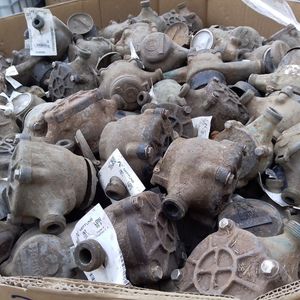
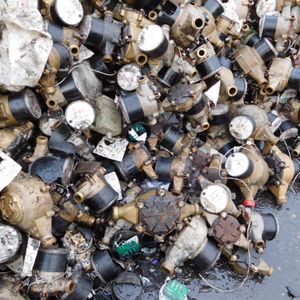
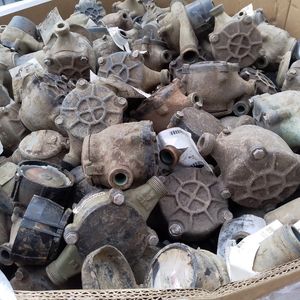
Whole water meter mix

Scrap Wiki

A water meter is an instrument used to measure water usage, and its material must meet the requirements of corrosion resistance, pressure resistance, and long-term use. Common water meter materials include brass, stainless steel, cast iron, and plastic, among others. Among them, discarded brass water meters are a common type of non-ferrous metal waste. Its material is generally brass with a copper content of 60-70%. In some cases, water meters are sold intact, while in other cases, the dismantled water meter and water meter head are sold separately. The so-called "clean brass water meter" refers to the sale of a single, disassembled copper meter plate as a waste material.

Whole Water Meter Waste

After disassembly, the main components of a whole water meter are the water meter shell and the water meter head. A completely disassembled clean brass water meter shell has almost no impurities and is a high-quality brass waste material. Additionally, there are red brass water meter shells that are sold separately, with a copper content of around 85%, which is a high-quality, deep-drawn brass and an excellent non-ferrous metal raw material.

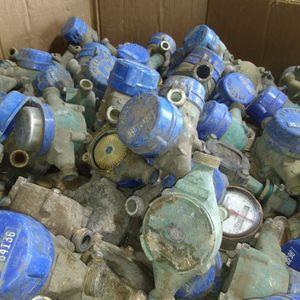
Common Classification

According to the working principle, water meters can be divided into mechanical water meters and electronic water meters.
Traditional water meters are mechanical water meters, which mainly consist of gears, valves, and other components, typically made of plastic and aluminum. Their characteristic is that the digital display is in the form of a rotating dial. In recent twenty years, water meters have been predominantly electronic, which use electronic technology to record and transmit water flow data and may contain the following electronic components:
1. Storage device: used to store water usage data and other related information.
2. Display screen: possibly a liquid crystal display (LCD), used to display water usage and other information on site.
3. Battery: powers the electronic components of the water meter, especially in the absence of an external power source.
4. Sensor: detects water flow and converts the physical quantity into an electronic signal that can be read by a microprocessor.
However, clean brass water meters do not contain these components. This is for reference only.

Common Sources

Clean brass water meter waste is produced worldwide, and the output is higher in densely populated areas.

Value Points

Clean brass water meters have fewer impurities, especially in terms of glass, circuit boards, plastic, and rubber.

Processing Methods

It can be directly smelted into rough copper ingots. Alternatively, it can be further processed through mechanical crushing and sorting to remove iron impurities and sold as crushed brass.

Detection Methods

Try to distinguish between brass and red brass water meters with the naked eye, and use a handheld spectrometer for detection if necessary.

Matching Direction

Crushing plants or rough brass processing plants.

Special Attention

During transactions, pay attention to the differences between whole water meters, clean water meter shells, and water meter heads, which have significantly different values.

Gallery

Whole water meter mix
Back to Parent Category