Polished zorba

Scrap Wiki

Shredded non-ferrous metal scrap, primarily consisting of aluminum, but also containing other metals such as zinc, brass, copper, and stainless steel.
Polished shredded aluminum refers to aluminum shreds that have been polished, typically processed for compliance with import standards and destined for China.

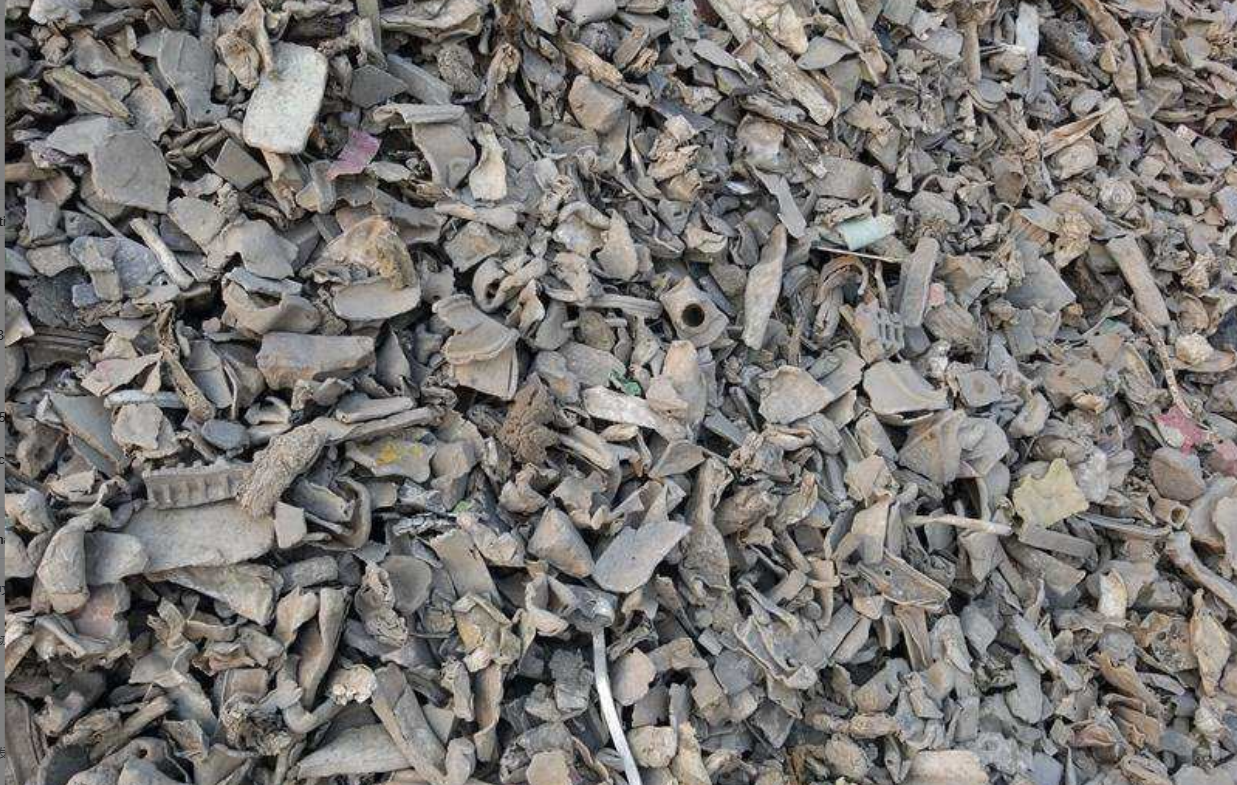
Shredded (Medium)
Shredded (Medium)

ISRI refers to it as Zorba. Its definition is: crushed non-ferrous scrap (primarily aluminum), consisting of a combination of non-ferrous metals: aluminum, copper, lead, magnesium, stainless steel, nickel, tin, and zinc, in elemental or alloy (solid) form. The percentage of each metal in the non-ferrous metals must be determined by mutual agreement between the buyer and seller. Scrap obtained through eddy current, air separation, flotation, screening, or other separation technologies, or a combination thereof. Passed through one or more magnets to reduce or eliminate free iron and/or large iron contaminants. Free of radioactive materials, slag, or ash.
When describing shredded material, there is an important expression used to specify its specification, which is the amount of metal and the copper content, expressed as "xx/xx." For example, "95/5" indicates that 95% of the shredded material is metal, and within the metal, 5% is copper (also known as red metals, Reds, which includes copper, brass, and copper wire).

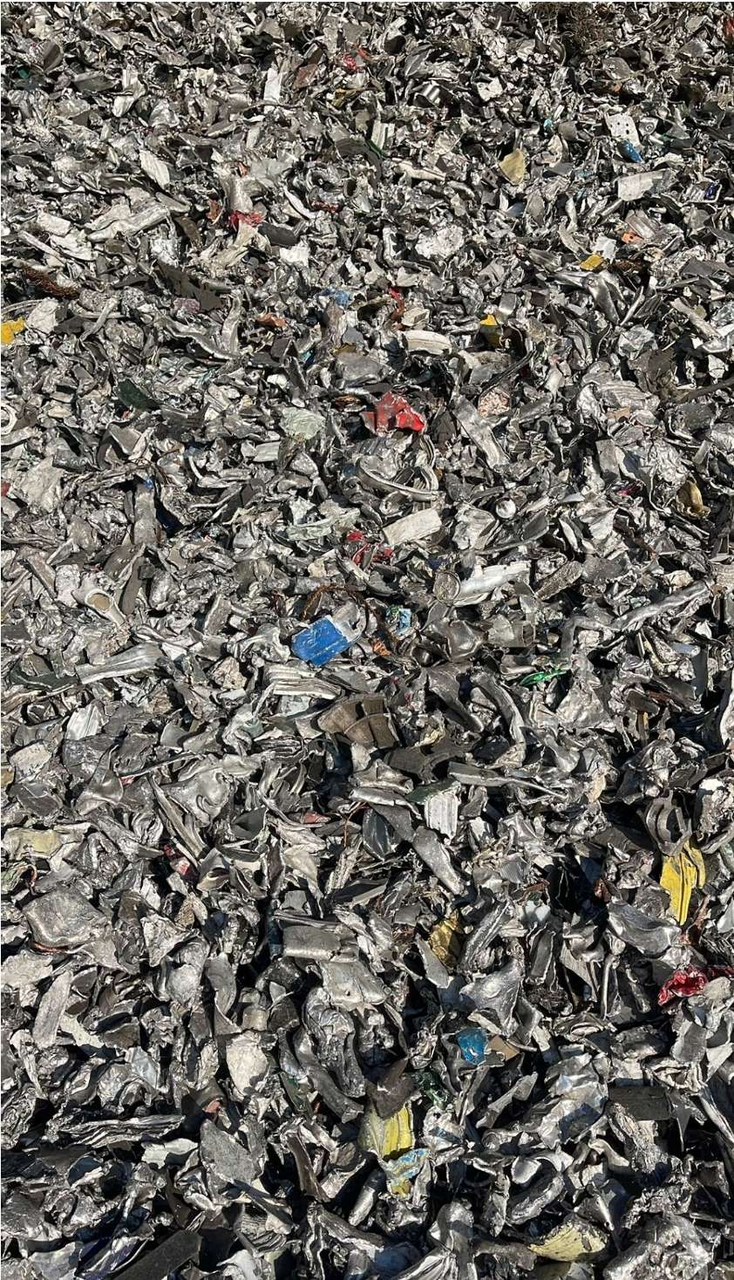
Detailed Shred Specification

Common Classification

  1. Based on copper content, Zorba can be classified as high-copper material and low-copper material. High-copper material generally refers to Zorba with copper content of 5% or higher. This is often medium or small in size. Low-copper material generally refers to Zorba with copper content between 1% and 5%, which is often medium or large in size.
  2. Based on metal content, it can be divided into high-grade and low-grade material. High-grade material generally refers to Zorba with metal content of 90% or more. This shredded material is often previously sorted quite cleanly, with little iron, plastic, or wood. Low-grade material generally refers to Zorba with metal content below 90%, which often contains more impurities other than non-ferrous metals, such as iron, plastic, wood chips, rubber, etc. Some low-grade material, although with a low metal content, has a relatively higher copper content.
  3. Classification by size: Zorba is commonly divided into Large, Medium, and Small sizes.
    Large pieces generally have a size between 10mm-20mm. Typically, this type of Zorba has a higher metal content, and because of its larger size, it also has a higher yield rate, approximately 92%-93%. However, during processing, copper tends to be screened out, so large pieces often have lower copper content, usually not exceeding 3%.
    Medium pieces generally have a size between 5mm-10mm. Medium-sized Zorba has a higher metal content, with its size between large and small pieces. Its yield rate is slightly lower than that of large pieces, approximately 91%-92%. Copper content is generally no more than 4%.
    Small pieces generally have a size between 0mm-5mm. Small pieces have a lower yield rate, typically around 90%, but a relatively higher copper content. This is because a large amount of crushed copper tends to settle at the bottom due to its small size and heavy weight. Copper content in small pieces is often more than 5%, and can even reach over 10%.

Common Sources

The main source of Zorba is from automobile dismantling and shredding facilities or other civilian scrap shredding plants. Depending on the origin, the content and proportion of metals will vary. Shredding plants from automobile dismantling facilities produce a higher proportion of raw aluminum (casting aluminum) compared to civilian scrap shredding plants. The regional and source differences result in slight variations in the elemental composition of the metals in Zorba, such as the ratio of raw aluminum (casting aluminum) to wrought aluminum (deformation aluminum) being roughly 1:1 in Zorba from the United States, whereas in European Zorba, the ratio is approximately 3:7. The metal content of shredded material produced in different continents, factories, or batches varies, but some large shredding plants, due to their meticulous management and strict selection of incoming materials, can maintain relatively stable specifications of their produced shreds.

High Wrought Aluminum Content in European Shred
High Cast Aluminum Content in American Shred

Value Points

The value of Zorba lies in the value of its non-ferrous metals. Compared to aluminum, copper (including red copper, brass, and shredded copper wire) has a lower content but a higher unit price. Therefore, copper holds significant value in Zorba, and learning to judge the content of non-ferrous metals and copper in Zorba is very important. Training to visually estimate the cargo's quality is essential, as experienced individuals can accurately judge the copper content within 1%. Generally speaking, scattered copper can be easily seen in Zorba, indicating a content of at least 3%-4%.

Processing Methods

Processing of Zorba is relatively complex, often requiring not only manual sorting but also specific professional machinery and equipment. Zorba, after being magnetically sorted to remove iron, typically undergoes the following steps:
1. Flotation involves using a special solvent to adjust the solution to a density similar to that of aluminum alloy. The shredded material is then introduced into the solution. At this point, aluminum and lighter metals will float to the top of the solution, while heavier metals like zinc, copper, and stainless steel will sink to the bottom. The heavy (Heavy) metals separated at the bottom are the copper-zinc materials (Heavies).
2. After flotation, the shredded material often undergoes a further selection process. Metals are conveyed forward and thrown out based on gravity, which causes them to be arranged from near to far in order of increasing density. Non-metal impurities such as plastics, rubber, and wood can be separated during this process through transverse air blowing.
3. Next comes manual sorting. This step varies by region and company management. Some companies conduct sorting, while others do not. The level of sorting precision can also vary significantly.

Detection Methods

The detection method for Zorba is mainly sampling and testing. During the sampling process, the following issues should be noted:
1. The amount of sampling. Sampling is a scientific method of random sampling, which refers to the quantitative analysis of goods by manual sorting. It emphasizes the unity of accuracy and efficiency. The larger the amount of sampling, the more the accuracy tends to maximize, but the efficiency becomes increasingly lower; conversely, if the amount of sampling is smaller, the efficiency tends to maximize, but the accuracy becomes increasingly lower. Taking a standard cargo container of approximately 25 tons as an example, the conventional sampling amount is usually 300 kilograms to 500 kilograms. Sampling less than this amount results in too low accuracy and does not provide enough information; sampling more than this amount results in low efficiency due to the manual sorting process, increasing the burden. Therefore, in all cases involving sampling and testing of Zorba or other shredded materials, reaching a consensus on an acceptable sampling amount is the first priority.
2. The method of sampling. During the stacking and transportation of Zorba scrap, different materials, such as aluminum, red copper, brass, and wire, do not distribute uniformly due to their differing weights, sizes, and shapes. Heavier, smaller copper tends to accumulate at the bottom or lower part of the pile; in contrast, aluminum shreds and larger pieces of metal like stainless steel tend to accumulate at the top or upper part. If the sampling process does not evenly sample from all layers, the results may be biased due to the different sections sampled. For instance, if sampling is limited to the top or upper part, the detection may show a lower copper content but a higher metal content; conversely, if sampling is limited to the bottom or lower part, the copper content may appear higher, but the metal content may be lower due to a higher content of impurities and non-metal dust.
3. The timing of sampling. Long-term storage, especially when exposed to the elements, can lead to oxidation and corrosion of metal materials, affecting the quality of the cargo. Therefore, once there is a need for sampling and testing, it should be promptly arranged to minimize storage time. This not only ensures that the test data is closer to reality but also reduces customer losses.

Matching Direction

The matching directions for Zorba are relatively broad, with the main demand directions being:
1. Sorting-oriented processing companies
These companies have complete sorting equipment, including selection, flotation, magnetic separation, eddy current, and even X-ray sorting equipment. Some also have the capability for manual sorting. In addition to sorting equipment, some possess equipment for polishing. These companies often operate in regions with flexible import-export policies and lower labor costs, such as Thailand, Malaysia, India, and Pakistan. Through assembly line operations, they convert Zorba waste into several or even dozens of recycled raw material products, such as shredded aluminum, shredded brass, shredded zinc, shredded brass, shredded magnesium, etc. Of course, the sorting precision differs between companies, and the resulting products are not identical. Some companies directly sell the copper-zinc materials as a product.
2. Melting-oriented production companies
These companies mainly consist of recycled aluminum producers, who own complete sorting equipment and equipment for melting shredded aluminum and other raw materials to produce products primarily consisting of aluminum ingots and aluminum water. Some of these companies do not configure their own sorting equipment but instead outsource the sorting of Zorba waste to sorting companies for processing. After processing, the shredded aluminum is used for production, while the other products sorted out, such as copper, zinc, and magnesium, are generally sold separately. These companies, which combine sorting and melting production, are primarily located in regions like Thailand, Malaysia, India, and Pakistan.
Shredded (Medium) is suitable for both sorting companies and melting companies. The prices in mainland China and Southeast Asian markets are comparable to those in India and are at relatively high levels.
Unpolished shredded material is not allowed to be imported into China.

Special Attention

The primary focus for Zorba is its content specification. Content mainly includes two aspects: metal content and copper content. Since copper has a high value, a deviation of 1% in its content can significantly impact the value of the cargo itself. Therefore, the copper content is particularly crucial.
For the data on copper content, if it is not possible to inspect the goods on-site, we can collect information through the following methods:
1. Analyze the physical images provided by suppliers and quotations to carefully assess the proportion of copper.
2. Analyze long-term data from the supplier/factory; data from the same supplier/factory usually shows similarities.
3. Obtain detailed processing data from downstream buyers who have previously purchased this specification of Zorba. This data is often more genuine and direct than the supplier's data because the supplier's data may be based on small samples (tens to hundreds of kilograms).

Gallery

Polished zorba
Back to Parent Category