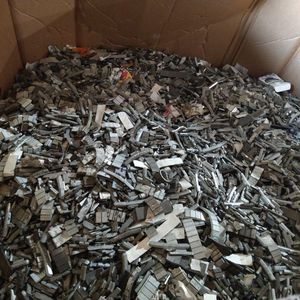
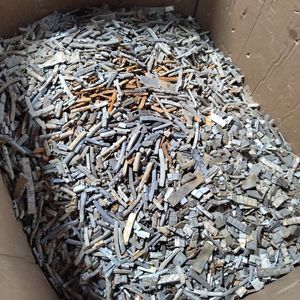
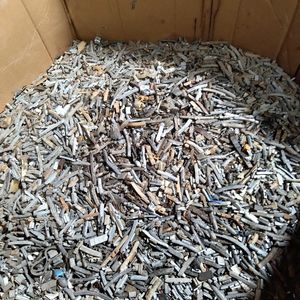
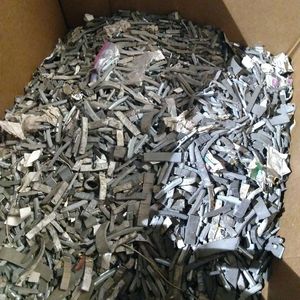
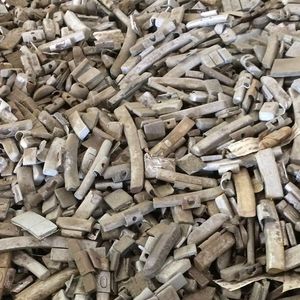
Wheel weights, also known as "tyre lead," are used to balance vehicle tires. They are usually made of lead, but some are made of iron. These lead blocks are installed on the wheel to ensure balance during tire rotation, reducing vibration and prolonging tire life. As tires are balanced and replaced, these lead weights may be removed and become scrap. Tyre lead is a high-value non-ferrous metal scrap that can be recycled and reused. In the recycling process, they are collected and then transformed into recycled lead through melting and purification. This recycled lead can be used to manufacture new lead products, including new tyre lead blocks or other lead-containing products. In the ISRI system, tyre lead is named "Ropes," which is defined as tyre lead with or without iron clips.
Common Classification
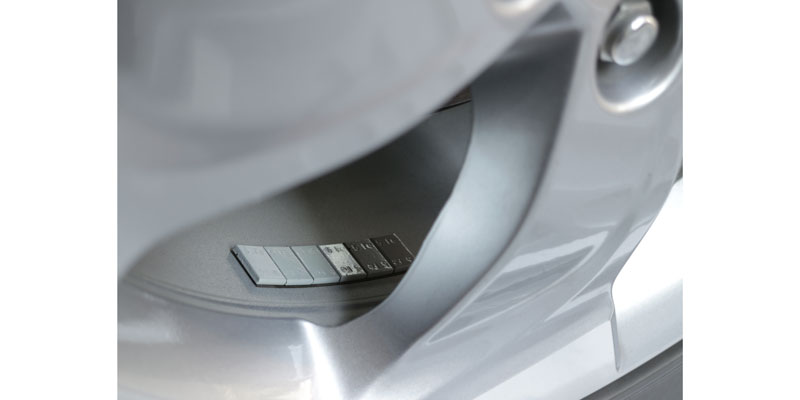
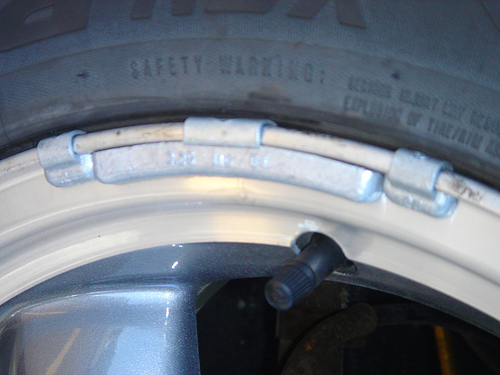
Most wheel weights are made of lead, but some are made of iron. There are two types of wheel weights: adhesive and clip-on. Clip-on wheel weights are more common and often have iron clips.
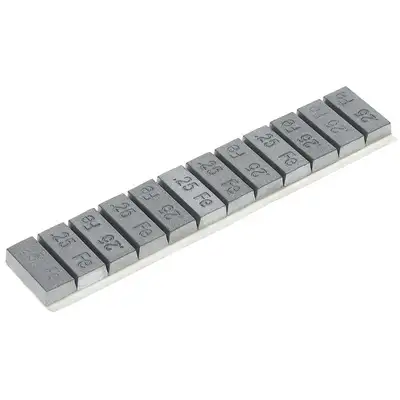
Adhesive type tyre lead
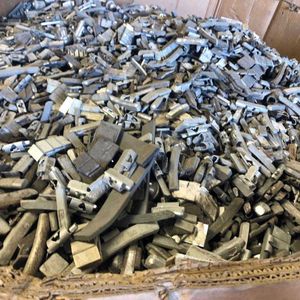
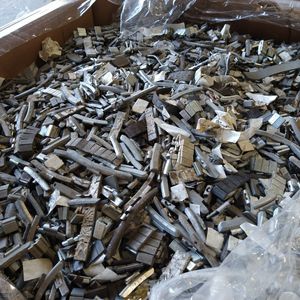
Clip-on tyre lead
Common Sources
Wheel weight scrap can be recovered from various sources, in addition to waste recycling. The main sources include:
1. Automobile repair shops and tyre replacement centers: Old wheel weights are usually removed during tyre replacement or balancing. These places are the primary locations for recovering tyre lead.
2. Automobile dismantling and recycling companies: When vehicles reach the end of their life and are sent for dismantling, wheel weights can be recovered during tyre or wheel disassembly.
3. Tyre recycling and remanufacturing facilities: During tyre recycling and remanufacturing, the weights on the tyres are removed and recovered separately.
Value Points
Clip-on wheel weights have iron clips and the remaining part is lead. The lead recovery rate is approximately 60-65% during melting. Adhesive type wheel weights have a significant proportion of pure iron. How to identify lead and iron wheel weights? Mainly through the following methods:
1. Visual inspection:
- Color: Lead weights are usually silver-gray and may darken over time due to oxidation. Steel or zinc weights may have a coating, such as a zinc coating, which gives them a different color and luster.
- Markings: Some weights may have manufacturer markings that directly indicate the material type, such as "Fe" for iron (steel), "Zn" for zinc, and "Pb" for lead.
2. Weight feeling:
- Due to lead's higher density, lead weights will feel heavier in your hand compared to steel or zinc weights of the same volume.
3. Magnetic test:
- Using a magnet can help identify the material type. Lead and zinc are non-magnetic, while steel is magnetic. If the magnet is attracted to the weight, it is likely steel.
4. Knocking sound:
- Different metals produce distinct sounds when knocked. Lead is relatively soft and will produce a lower-pitched sound when knocked, while steel and zinc will produce a more crisp sound.
5. Hardness test:
- Using a hard object (such as a steel nail) to lightly scratch the surface of the weight, lead will leave a more noticeable scratch due to its softer nature, while steel or zinc will be less likely to leave a scratch.
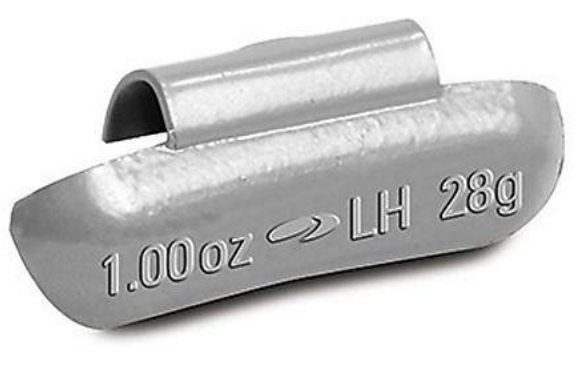
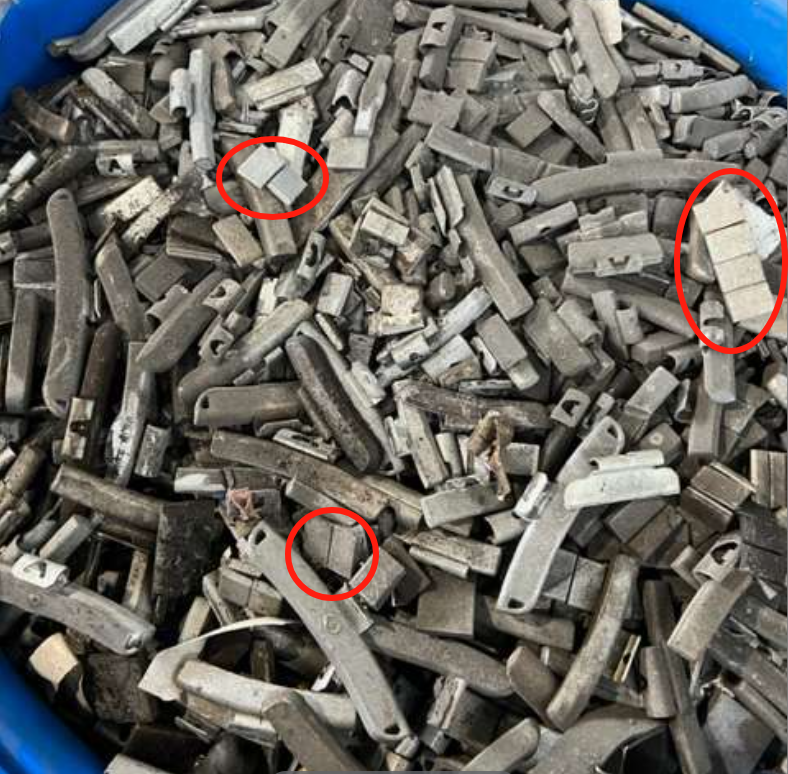
Structure of tyre lead, with iron clip on top
Rust on the iron clip indicates it's made of iron
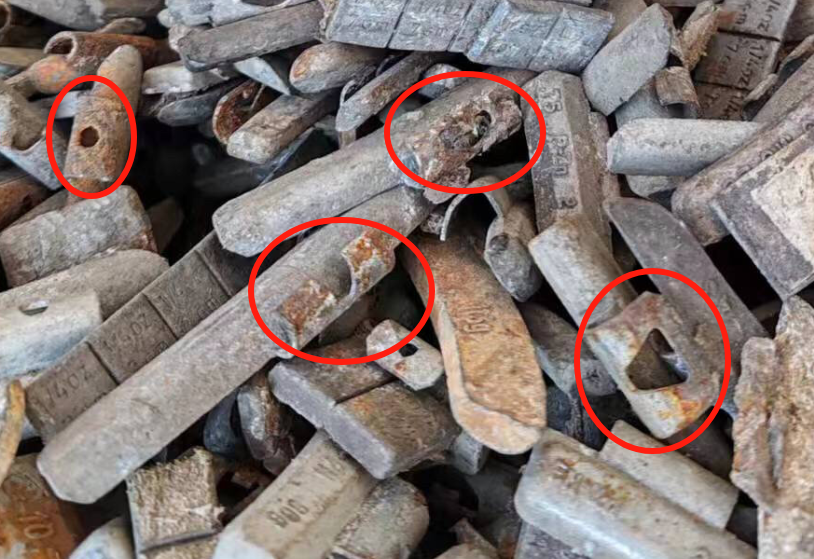
The red circle indicates adhesive type wheel weights, which are mostly pure iron or pure steel, reducing the overall lead metal recovery rate
In recent years, with increasing environmental requirements, lead has been considered a significant pollutant, and many automobile manufacturers have begun to phase out lead wheel weights, replacing them with iron, steel, or zinc.
Processing Methods
Tyre lead usually needs to be broken down and disassembled before being reused. Manual disassembly can be used, but the efficiency is relatively low. For high-efficiency disassembly, crushing and magnetic separation can be used to separate iron impurities. Some processing plants directly melt the tyre lead, and the iron impurities will sink to the bottom of the slag after the lead is melted. Crushing will cause a 2-3% loss of material, while direct melting will also result in metal lead being absorbed onto the surface of the iron impurities, causing loss.
Detection Methods
Matching Direction
Tyre lead is suitable for matching with waste processing plants that have manual disassembly capabilities or machine crushing and sorting capabilities. They can process tyre lead into clean recycled lead raw materials.
Special Attention
Be cautious of adhesive type wheel weights that are pure iron, such as the one shown below: