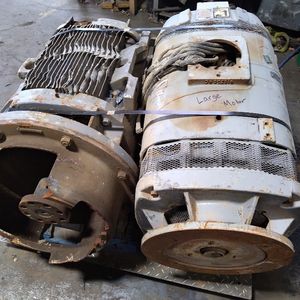
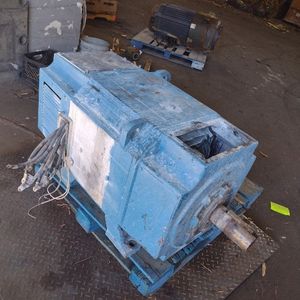
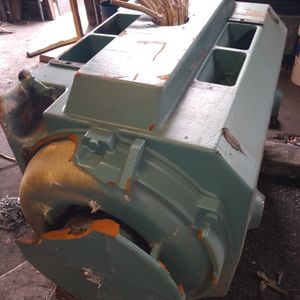
DC motor

Scrap Wiki

A motor, also known as an electric motor, is a device that converts electrical energy into mechanical energy and outputs power. It works on the principle of electromagnetic induction, where an electric current flows through a coil in a magnetic field, causing the coil to rotate and drive a rotor. The rotor is connected to a flywheel, which rotates to drive the engine. Scrap motors are a common type of waste, and their main value lies in the copper or aluminum coils.

Common motor structure

Mixed motors are a combination of different-sized motors, including small, medium, and large ones, sold together in a single package.

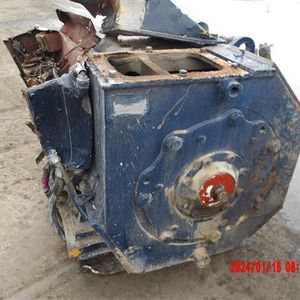
Common large motors

Common Classification

Scrap motors can be classified based on the material of the coil, which can be either copper or aluminum. Most motor coils are made of purple copper with an insulation coating, but some low-end motors may use aluminum wire with a coating. It is difficult to accurately identify the material from the appearance alone, and often, the motor needs to be disassembled to check the coil.
Scrap motors can also be classified based on the material of the outer shell, which can be either aluminum or iron. Aluminum shell motors can be disassembled to produce about 7% of broken aluminum shells, which can be sold as relatively clean broken aluminum materials. The price of aluminum shell motors is significantly higher than that of iron shell motors.
Scrap motors can also be classified based on their energy source, which can be either AC or DC. DC motors have a higher copper content due to the presence of a commutator, while AC motors have a higher output power and are more stable, often used in large equipment and industrial settings. New energy motors are mainly AC permanent magnet synchronous motors and asynchronous motors.

Common Sources

Motors are widely used in various industries, agriculture, and daily life, and their waste output is distributed across different regions. The main producing countries of scrap motors include the United States, Europe, Japan, South Korea, and Australia. Due to the high labor costs required for processing and recycling scrap motors in these countries, most of them are exported to other countries.

Value Points

Mixed motors are composed of different-sized motors, and the copper content varies among them. Small motors, for example, have a higher copper content, typically around 11-13%, while medium-sized motors have a copper content of around 9%, and large motors have a copper content of around 8%. The value of mixed motors increases with the proportion of small motors.

Processing Methods

The processing of scrap motors mainly involves mechanical or manual dismantling and separation. The first step is to remove the outer shell, which can be done mechanically or manually using methods such as hammering or oxygen cutting. This step can produce shell-less motors, as well as broken aluminum or iron that can be sold or used as raw materials.
The next step is to separate the stator and rotor, and then remove the coils using cutting tools. The rotor shaft (made of 20Mn5Cr manganese steel) and stator shell are separated and sold separately.
The coil part, which is the insulated wire, is processed differently depending on the demand, equipment, and export direction. Some processing plants can sell the insulated wire directly, while others need to burn off the insulation or crush it into copper rice (No. 2 communication wire rice).

Detection Methods

The detection of scrap motors mainly involves checking whether the coil is made of copper or aluminum. This is usually done by partially or completely dismantling the motor to inspect the coil. Both the buyer and seller should avoid mistakenly identifying aluminum motors as copper motors, as this can lead to disputes.

Matching Direction

The processing of scrap motors requires a high level of manual labor, and different countries have strict regulations on the import of scrap motors. Therefore, the dismantling of scrap motors is mainly done in countries such as Thailand, Malaysia, Pakistan, and India, which have relatively lenient policies and lower labor costs. Scrap motors are best suited for sale to junk processing plants in these countries.

Special Attention

When purchasing scrap motors, it is essential to ensure that the pictures provided by the seller are accurate and representative of the actual goods. Some suppliers may use the same few photos repeatedly, which can lead to significant risks. The value of scrap motors depends on the buyer's assessment of the value of different sizes and shapes, so if the pictures do not match the goods, it can lead to losses and disputes.
It is also crucial to pay attention to the material of the coil, whether it is copper or aluminum, and the proportion of aluminum motors. These factors are critical to the quality of the goods. Generally, a small percentage of aluminum motors is unavoidable, but the total proportion should not exceed 20%. The buyer and seller should agree on an acceptable range before the transaction.
Finally, some motors may contain a small amount of permanent magnets, which are made of rare earth materials such as neodymium, dysprosium, and boron. These materials are highly valuable and can be separated and sold separately to increase the product value. Experienced buyers can identify the presence of permanent magnets by observing whether iron filings are attracted to the motor shell.

Gallery

DC motor
DC motor
DC motor
DC motor
DC motor
DC motor
DC motor
Back to Parent Category