Meatball

Scrap Wiki

Motor, translated from "Motor", is an electric motor that converts electrical energy into mechanical energy and outputs power. It works by using electromagnetic induction to rotate the rotor and drive the flywheel. Scrap motors are a common type of waste, with their primary value lying in the copper or aluminum coils.

Common Motor Structure

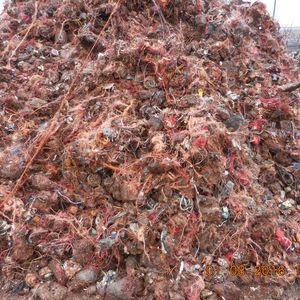
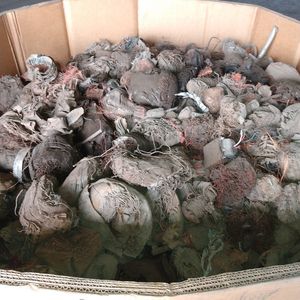
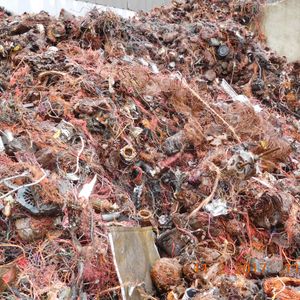
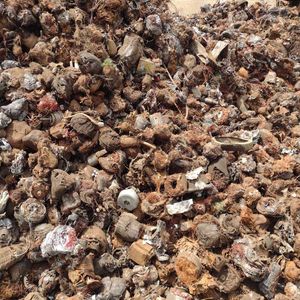
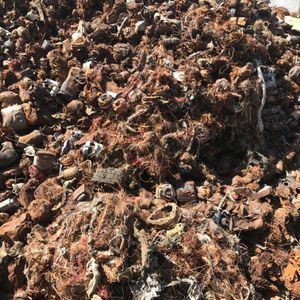
After crushing the motor, it is sold without the outer casing, but often contains non-metallic impurities such as soil, dust, and heavy oxidation. This type of crushed motor is called "meatballs" overseas and "扁货" or "牛粪" in Chinese.

Pure copper crushed motors are named Sheema by ISRI, which includes a mixture of copper and aluminum materials from shell-less electric motors. It may contain insulated copper wire bundles. There may be trace percentages of other contaminants and powders. No free iron or sealed devices. If mixed with aluminum wound materials (aluminum coils), ISRI names it Shelmo (crushed aluminum motor).
Common Classification

Motors can be classified by coil material into copper/aluminum motors.
The common motor coil is made of phosphor bronze material, with an outer layer of insulating paint. However, some low-end motors use paint-coated aluminum wire as the material. These motors are difficult to accurately identify from their appearance. More often, the outer casing needs to be removed to inspect the coil's edge.
By motor casing material, they can be classified into aluminum/iron shell motors.
Aluminum shell motors can be disassembled to obtain about 7% crushed aluminum shell, which can be sold as relatively clean crushed aluminum raw materials. The price is almost five times higher than that of iron shell motors, so the price of aluminum shell motors is correspondingly higher.
By energy type, motors can be classified into AC/DC motors.
DC motors have a commutator, so they contain more copper than AC motors. AC motors have a larger output power and are more stable, often used in large-scale equipment or industrial scenarios. New energy motors are mainly AC permanent magnet synchronous motors and asynchronous motors.
By motor size, they can be classified into large/medium/small/mixed motors.
Different sizes of scrap motors have varying copper content. Since high-copper DC motors are mostly small, and small motors are mostly made of iron shell, not cast iron, the copper content of small, medium, and large motors decreases sequentially. Small motors have a copper content of 11%-13%, medium-sized motors have a copper content of around 9%, and large motors have a copper content of around 8%. Mixed motors require a relatively accurate proportion of various sizes of motors to help buyers give a reasonable estimate.

Common Sources

Crushed motors are generally sourced from factories with motor recycling and crushing capabilities but lack disassembly capabilities. In the global context, the United States, Europe, Japan, South Korea, and Australia are the primary production regions.

Value Points

Crushed motors are composed of different sizes of scrap motors. The copper content varies with motor size. For example, high-copper DC motors are mostly small, and small motors are mostly made of iron shell, not cast iron, so the value of small motors is relatively high. The copper content of small, medium, and large motors decreases sequentially. Small motors have a copper content of 11%-13%, medium-sized motors have a copper content of around 9%, and large motors have a copper content of around 8%. The higher the proportion of small motors in mixed motors, the higher their relative value.

Processing Methods

  1. Separate and disassemble coils
    Next, separate the remaining parts of the scrap motor into stators and rotors, and disassemble the coils using shears or other methods. Then, separate the clean rotor shaft (20Mn5Cr manganese steel) and stator casing.
  2. Process coil parts
    The processing of coil parts, i.e., enameled wires, varies depending on different requirements, equipment, and export directions. Some processing plants can directly package and sell enameled wires; however, since China does not allow the importation of enameled wires, if exporting to China, the enameled wires need to be either burned to remove the insulation or crushed into copper scraps (grade 2 communication wire scraps).

Detection Methods

The detection of motors mainly focuses on whether they are copper or aluminum. Both parties should avoid trading aluminum wire motors as copper wire motors, which can lead to disputes.

Matching Direction

The processing of scrap motors requires high labor costs and strict import regulations in various countries. Therefore, the disassembly of scrap motors is mainly located in Southeast Asian countries such as Thailand, Malaysia, and Pakistan, and India. These countries have relatively relaxed import and export policies and lower labor costs. Scrap motors are most suitable for pushing to junk processing plants in these regions.

Special Attention

The primary concern is the authenticity of the photos provided by the seller. In cases where the buyer cannot inspect the goods in person, the seller should provide as many detailed, accurate, and representative photos as possible. Some suppliers like to use the same few photos for reporting year after year, which poses significant risks. The value of motors to some extent depends on the buyer's judgment of the value of different sizes and shapes of motors. If the photos and goods do not match, it can easily lead to losses and claims.
Secondly, attention should be paid to the material of the coils, whether it is copper wire or aluminum wire, and what proportion of aluminum wire motors are included. These are crucial issues for product quality. Generally, it is unavoidable to have some aluminum motors mixed in, totaling around 20%. A rough acceptance range should be agreed upon before the transaction.
Lastly, motors often contain a small amount of permanent magnets, mainly made of rare earth materials such as neodymium, iron, and boron, which are highly valuable. The outer casing of these motors often has iron filings, which can be attracted to the motor. Experienced buyers can determine whether the motor contains permanent magnets by observing whether the iron filings are attracted to the motor casing. After separation, they can be sold separately to increase the product value.

Gallery

Meatball
Meatball
Meatball
Meatball
Meatball
Meatball
Meatball
Back to Parent Category