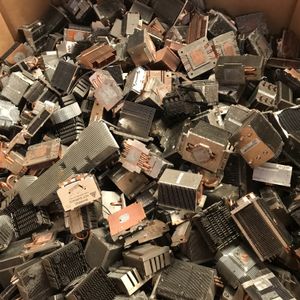
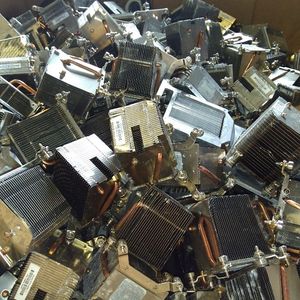
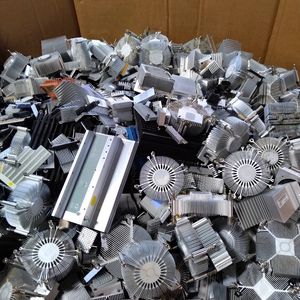
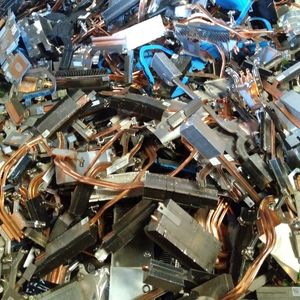
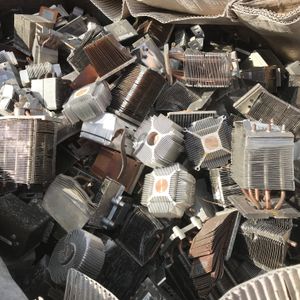
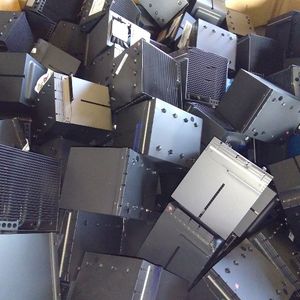
Heat sink mix

Scrap Wiki

Copper aluminum heat exchangers are devices installed on large machinery to cool down through air cooling or water cooling. There are mainly two types of materials used: purple copper and copper alloys. Purple copper has excellent thermal conductivity and good corrosion resistance, but due to its high production cost, it is commonly used to manufacture small heat exchangers and condensers. Copper alloy heat exchangers mainly have two types of materials:
First, brass, mainly 70/30 brass, which is an alloy of 30% zinc and 70% copper. Brass has good thermal conductivity, is not easily corroded, and has strong corrosion resistance, making it suitable for manufacturing heat exchangers, especially in seawater or saltwater environments with low requirements.
Second, nickel-copper, mainly 70/30 and 90/10 nickel-copper alloys, with stronger corrosion resistance, mainly suitable for manufacturing heat exchangers for high-sea saltwater environments.
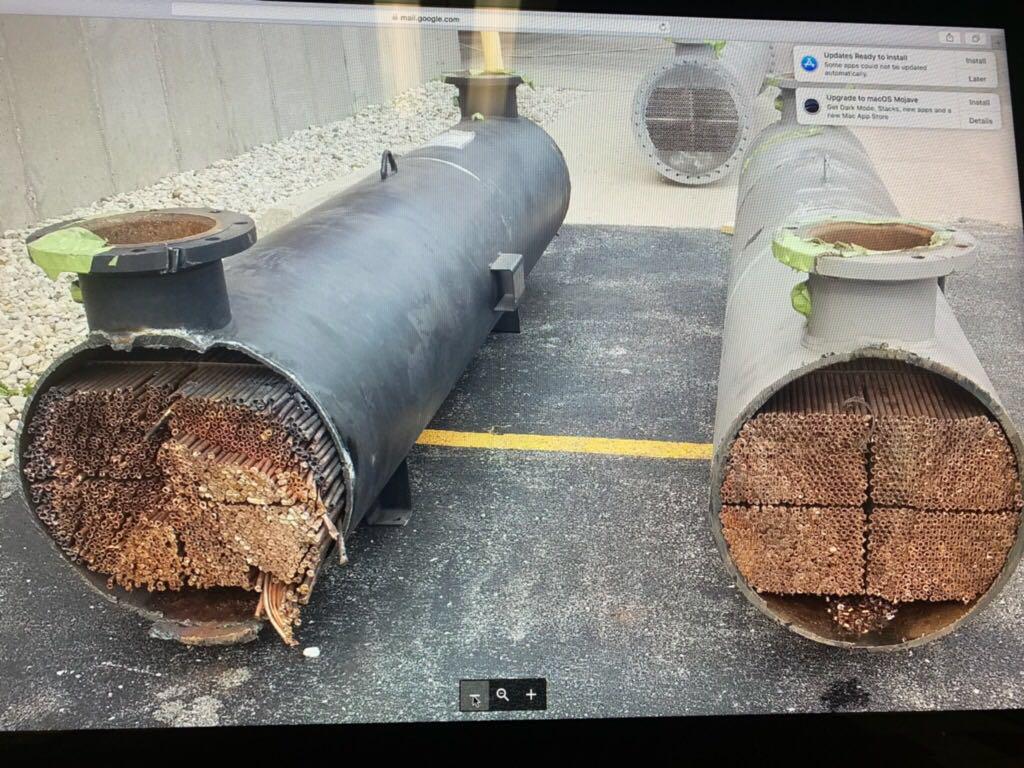
Brass Heat Exchanger

Common Classification

Brass scrap is often named and distinguished by the place of origin (country or continent). For example: American brass, Middle Eastern brass, Australian brass, etc. This classification method is due to the fact that brass products often have similar qualities due to the country or region of origin. For instance, American brass has low lead content due to national standards. Additionally, different regions have similar water scales, wind sand, and coating conditions. Experienced brass scrap industry personnel can determine the origin of the scrap from the image, and even evaluate the brass recovery rate based on the origin.

Common Sources

Copper aluminum heat exchangers come in various sizes, from tens of centimeters to tens of meters in length. The structure mainly consists of an outer shell, heat exchange tubes, and a fixed head. The outer shell is usually made of cast iron or stainless steel, accounting for about 50-60% of the total weight.

Value Points

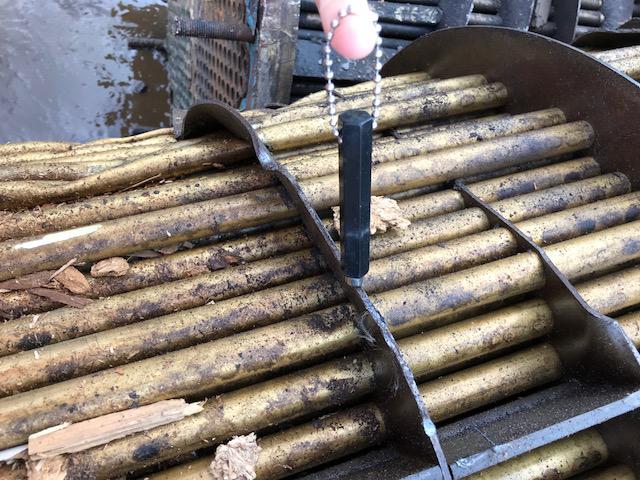
The heat exchanger's two ends and internal structures often have iron-made components that fix the heat exchange tubes, also known as "iron heads".
These materials are usually sold in the form of copper pipes after removing the iron-made outer shell and structural components. Longer pipes can be cut into suitable lengths. The degree of rust inside and outside the water pipes varies, with non-metallic impurities accounting for about 1-3%.

Processing Methods

Manual disassembly:
Copper aluminum heat exchanger scrap often has a large amount of metal attachments such as iron, stainless steel, and zinc, as well as non-metallic attachments like rubber, plastics, and water scales. Manual disassembly is essential for copper aluminum heat exchangers. For example, the gasket in the valve and the stainless steel connecting head need to be manually disassembled to increase their value and quality.

Detection Methods

Matching Direction

Scrap processing factories with manual disassembly capabilities

Special Attention

The heat exchanger's two ends and internal structures often have iron-made components that fix the heat exchange tubes, also known as "iron heads".
These materials are usually sold in the form of copper pipes after removing the iron-made outer shell and structural components. Longer pipes can be cut into suitable lengths. The degree of rust inside and outside the water pipes varies, with non-metallic impurities accounting for about 1-3%.
As shown in the figure below, the horizontal structure that fixes all the heat exchange tubes is also called the "iron head", usually made of iron, and can be attracted by magnets.

Brass Heat Exchanger

Gallery

Heat sink mix
Heat sink mix
Heat sink mix
Heat sink mix
Heat sink mix
Heat sink mix
Heat sink mix
Back to Parent Category