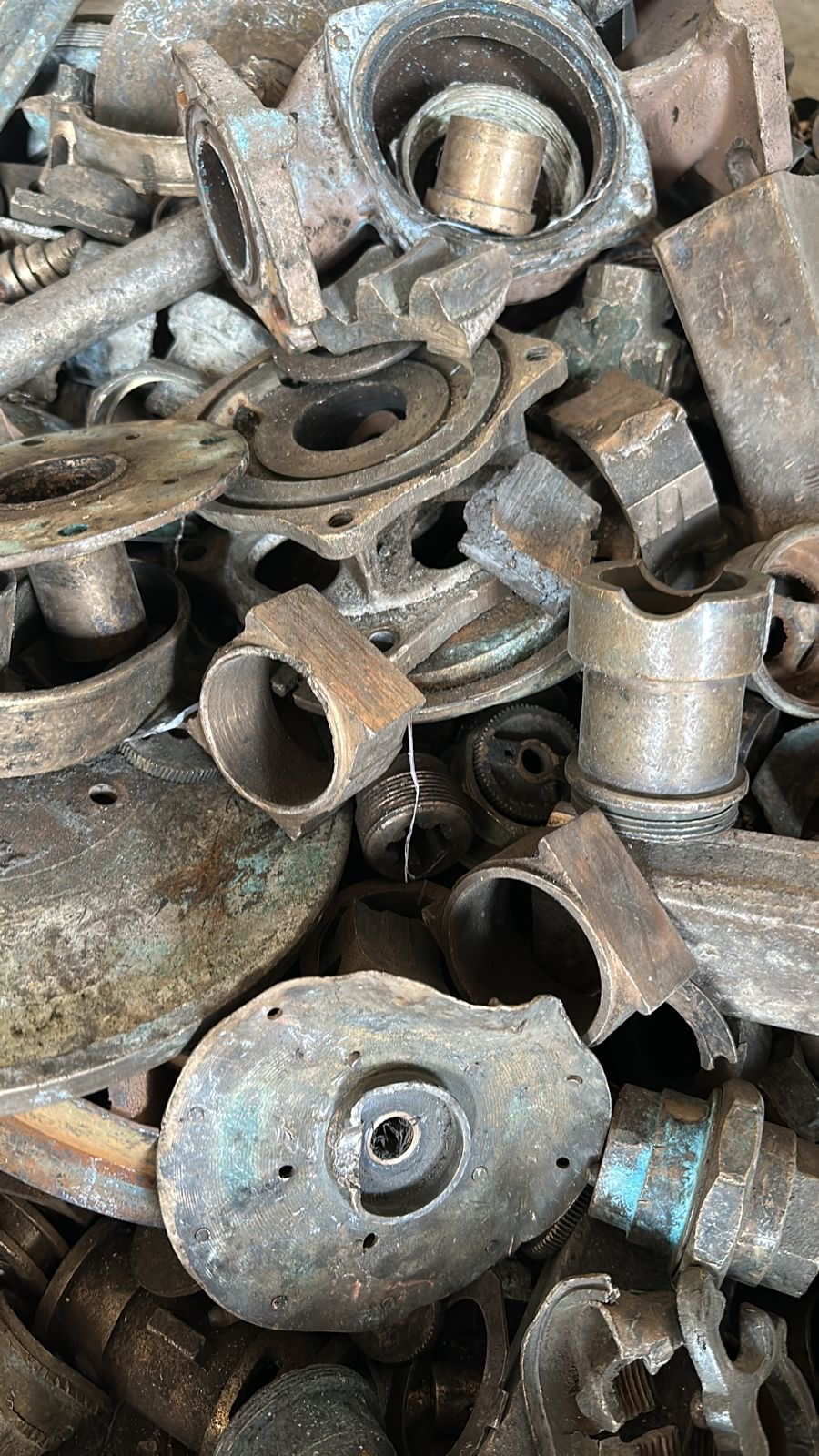
Semi-red brass

Scrap Wiki

Red brass, a common term for a type of copper alloy, is often referred to as red brass or red copper because it, like yellow brass, is mainly composed of copper (Cu) and zinc (Zn). Semi-red brass, which contains 78% to 81% copper, does not meet the standard of red brass (which typically contains over 85% copper), and thus is of slightly lower quality and value. Besides copper and zinc, red brass may contain small amounts of tin (Sn) or other metals. Named for its distinctive red color, red brass usually has a copper content of over 85%, which gives it good corrosion resistance and workability. It is widely used in the manufacture of pipe fittings, decorative items, musical instruments, and various mechanical and electrical components.

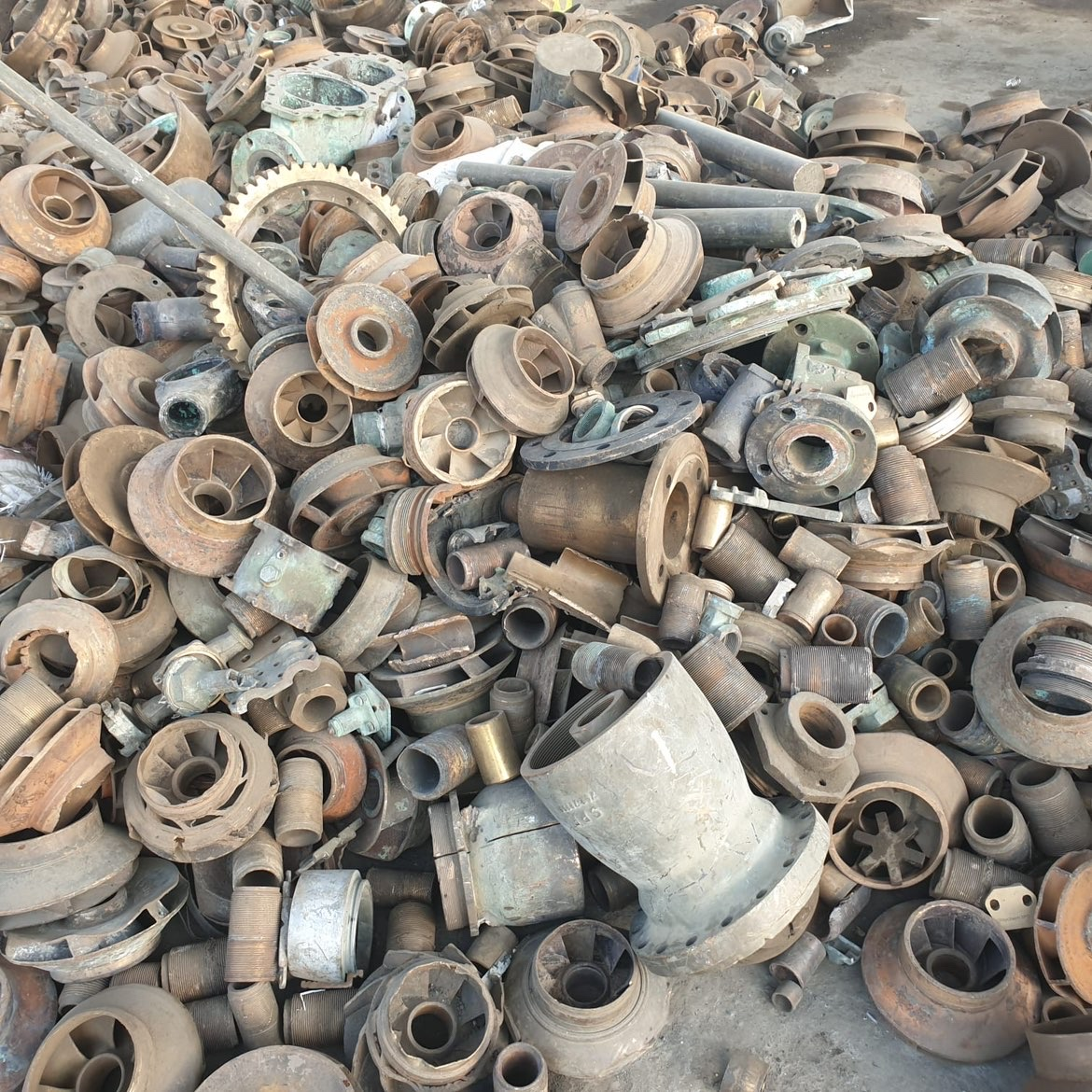
Common Red Brass
Common Red Brass

Common Classification

The main grade of semi-red brass is C84400 - this higher-lead red brass alloy is also used for valves and pipe fittings intended for freshwater environments, with a lower copper content of around 81%. The elemental composition is roughly as follows (values may vary depending on the specific manufacturer and application):
- Copper (Cu): Approximately 71% - 77%
- Lead (Pb): Approximately 6% - 8%
- Tin (Sn): Approximately 2% - 3%
- Zinc (Zn): The remainder, approximately 14% - 20%
- Nickel (Ni): 0.5% (including the allowable nickel content)
- Iron (Fe): 0.3% (maximum)
- Antimony (Sb), phosphorus (P), sulfur (S), aluminum (Al), etc.: Each element is typically less than 0.25%
The following valve is a common example of semi-red brass.

Mainly C84400 Alloy for Water Pipe Valves

Common Sources

Red brass is found worldwide, with greater output in regions with higher living standards and more developed industries. Additionally, areas near the sea produce more red brass scrap due to the alloy's better corrosion resistance. Red brass scrap can generally be recovered from the following scenarios:
1. Plumbing and valves: The corrosion resistance of red brass makes it suitable for water system fittings, such as faucets, valves, couplings, and other pipe fixtures. Water meters, in particular, made entirely of red brass, are common American scrap.
2. Musical instruments: With its high copper content and good resonance, red brass is suitable for the manufacture of wind instruments, notably brass instruments such as trumpets, trombones, and saxophones.
3. Mechanical parts: The mechanical strength and wear resistance of red brass make it applicable for the production of gears, bearings, screws, and other mechanical parts requiring long-term wear resistance.
4. Electronic components: Red brass has been used in recent years in the electronics industry for contacts, sockets, connectors, pins, switches, relays, and other electronic hardware.
5. Decorative components: Red brass is popular in decorative applications due to its good surface finish and color.

Value Points

The value proposition of semi-red brass lies in two aspects. First, semi-red brass has a high copper content, with a standard copper content of around 80%, significantly higher than yellow brass products. When scrap contains semi-red brass, it can be produced as standard yellow brass by adding zinc, which is much cheaper than copper. Second, if semi-red brass is meticulously preprocessed, removing ordinary yellow brass scrap, it can be used directly to produce red brass, with costs and energy consumption much lower than traditional methods. Therefore, the value of red brass lies in its purity. Pure semi-red brass scrap will fetch a higher price than yellow brass scrap, generally 10%-12% higher than LMECu; once mixed with yellow brass, its scrap price will decrease with the increase in preprocessing costs. When the proportion of red brass is too low, there is no longer a cost advantage in directly using it to produce red brass, and it can only be used as ordinary yellow brass, hence the price is far lower than that of red brass.

Processing Methods

We mentioned that the value of red brass lies in its purity and proportion. Therefore, the purpose of processing is to reduce impurities and sort red brass to enhance its value.
1. Disassembly
In components like red brass water meters and valves, there are often impurities such as plastic, yellow brass, stainless steel, and other metals or non-metals, which should be disassembled and removed as thoroughly as possible.
2. Sorting
Red brass should be meticulously sorted from yellow brass. Sorting mainly involves skilled workers manually selecting. Additionally, red brass can be distinguished into high-zinc red brass (85% copper, 15% zinc) and high-tin red brass (85% copper, 5% zinc, 5% tin, 5% lead) during preprocessing. High-zinc red brass, compared to high-tin red brass, is more reddish in color and often appears in the form of copper pipes.

Detection Methods

Red brass is relatively easy to distinguish with the naked eye by experienced staff. Inspection mainly involves the weight of ordinary yellow brass or semi-red brass mixed in the goods. The general method is to perform a certain amount of manual sorting for inspection.

Matching Direction

Red brass is a type of scrap non-ferrous metal with very specific demand characteristics. For most traders or yellow brass product manufacturers, red brass is merely a special type of yellow brass with a higher copper content. However, for factories and companies that specialize in producing red copper products such as red brass valves, red brass bearings, and red brass gears, the direct use of red brass is a highly cost-effective recycled raw material. Therefore, they can offer prices with certain advantages over traders or other copper alloy manufacturers. Red brass scrap should be matched with companies that can directly recycle it.

Special Attention

When offering semi-red brass, one should carefully inquire about the supplier's ratio of semi-red brass castings. In some cases, foreign suppliers offer Ebony but the goods actually contain a large proportion of semi-red brass (as shown in the image below), which does not meet the standard for Ebony, potentially leading to claims. Ensure that the supplier provides photos of the actual goods, which helps buyers to identify and assess the quality of the goods and offer a reasonable price, otherwise, there is a high risk of claims or even returns.

Standard Semi-Red Brass

Gallery

Semi-red brass
Semi-red brass
Semi-red brass
Semi-red brass
Semi-red brass
Semi-red brass
Semi-red brass
Back to Parent Category