Scrap Wiki
Bronze is an alloy predominantly composed of copper and tin. It is one of the earliest metal alloys widely used by humans, dating back to around 3000 BC during the Bronze Age. Due to the addition of tin, bronze is harder than pure copper, more corrosion-resistant, and has a higher melting point, making it suitable for casting various artifacts such as weapons, tools, ornaments, and musical instruments. In addition to copper and tin, bronze may contain other elements such as lead, zinc, and phosphorus, which can further alter its properties to adapt to different applications.
Bronze is an alloy based on copper, typically containing about 88-90% copper and 8-12.5% tin (Sn). Depending on the specific application, bronze can also be alloyed with other elements such as aluminum (Al), manganese (Mn), nickel (Ni), or zinc (Zn) to enhance its specific properties.
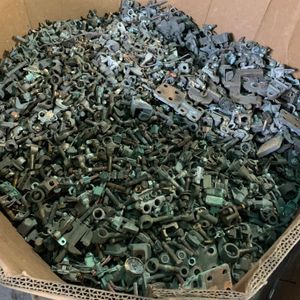
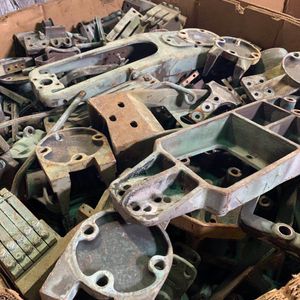
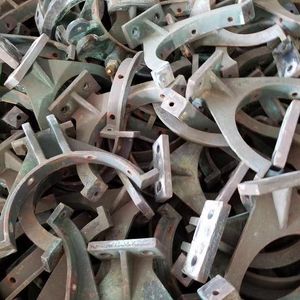
Silicon bronze is a copper-based alloy, primarily containing silicon and other alloying elements (such as manganese, nickel, and zinc), which is widely used due to its excellent mechanical properties and corrosion resistance. The composition and properties of silicon bronze make it an ideal material in multiple fields. Silicon bronze is a high-performance copper-based alloy, widely used in marine, aerospace, electrical engineering, construction, and chemical industries. Its common designations include UNS C65100, C65500, C65620, and C69300, each with specific compositions and characteristics suitable for various application needs. The characteristics of silicon bronze include:
1. Excellent mechanical properties: Silicon bronze exhibits high strength and good ductility, suitable for components requiring high strength and wear resistance.
2. Good corrosion resistance: It has excellent corrosion resistance in atmospheric, seawater, and various chemical environments, suitable for harsh conditions.
3. Superior electrical and thermal conductivity: Silicon bronze has good electrical and thermal conductivity, suitable for electrical and heat exchange applications.
4. Good processability: It is easy to cast, weld, and machine, suitable for manufacturing complex-shaped components.
.JPG)