Casting Red Brass, a common term for a type of copper alloy, is so named because it shares the primary components of copper (Cu) and zinc (Zn) with brass. It is referred to as casting red brass due to its red hue, and it can also contain traces of tin (Sn) or other metals. This red brass gets its name from its distinct red color, with copper content typically exceeding 85%, which endows it with superior corrosion resistance and workability. Red brass is extensively utilized in the fabrication of piping, decorative items, musical instruments, and various mechanical and electrical components.
In the ISRI system, red brass is designated as Ebony. It comprises red brass scrap, valves, mechanical bearings, and other mechanical parts, including castings made from various combinations of copper, tin, zinc, and/or lead. It should not include semi-red brass castings (containing 78% to 81% copper) or other alloys with lower copper content.
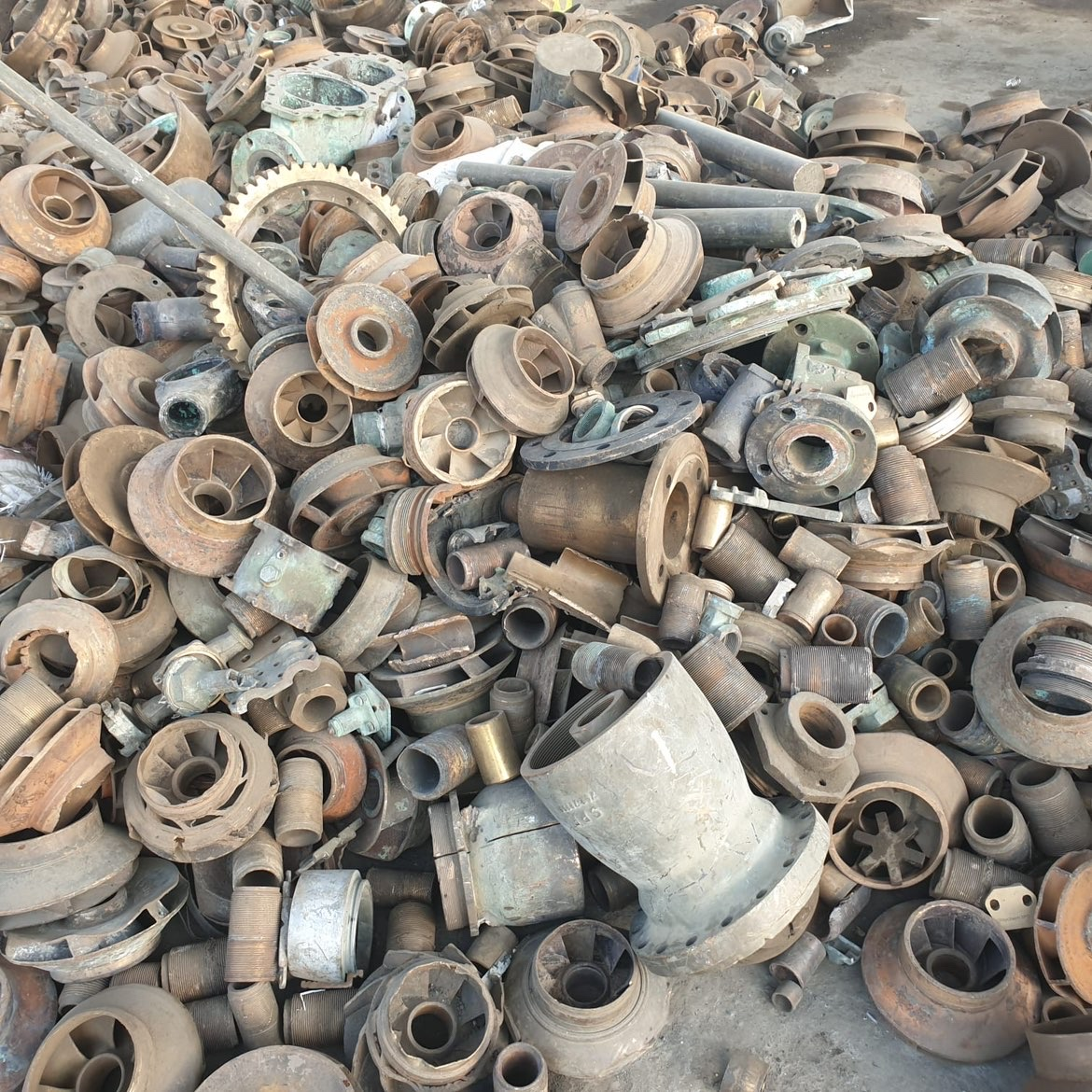
Given that the material and processing method of these red brass products are predominantly casting, they are also known as casting red brass. Below is an image of common red brass castings.
Common Red Brass
Common Classification
Casting red brass is classified mainly based on different ratios of copper and zinc, as well as the presence of other alloying elements, leading to various grades. Common classifications of red brass include the following American copper alloy numbers:
1. C23000 - A standard grade of red brass that falls under the category of Commercial Bronze. The C23000 alloy is primarily composed of 85% copper and 15% zinc, with the high copper content imparting the characteristic red color to red brass. This red brass has good corrosion resistance, strength, and ductility, making it suitable for various industrial applications, including pipe manufacturing, piping, architectural decoration, radiator parts, etc. Due to the high copper content in C23000 alloy, it also exhibits properties of red brass, such as good electrical and thermal conductivity, and is often used to manufacture electrical hardware. This alloy typically appears on the market in the form of pipes, tubes, fittings, building hardware, and other industrial components.
Typical elemental composition of C23000 brass is as follows:
- Copper (Cu): Approximately 85% - 87%
- Zinc (Zn): Remaining part (approximately 13% - 15%)
- Lead (Pb): 0.05% (maximum)
- Iron (Fe): 0.05% (maximum)
- Other elements: May contain trace amounts of other elements, but typically at very low levels
2. C84400 - This red brass alloy with higher lead content is used for making valves and pipe fittings intended for freshwater environments, with slightly lower copper content, around 81%. Elemental composition is roughly as follows (values may vary depending on the specific manufacturer and application):
- Copper (Cu): Approximately 71% - 77%
- Lead (Pb): Approximately 6% - 8%
- Tin (Sn): Approximately 2% - 3%
- Zinc (Zn): The remainder, approximately 14% - 20%
- Nickel (Ni): 0.5% (including the allowable nickel content)
- Iron (Fe): 0.3% (maximum)
- Antimony (Sb), Phosphorus (P), Sulfur (S), Aluminum (Al), etc.: Each element is typically less than 0.25%
C84400 alloy features include good casting properties, good mechanical properties, and moderate strength. With its high lead content, it has good wear resistance and self-lubricating properties, making it suitable for mechanical parts that involve friction and wear. Also, the corrosion resistance of this alloy is relatively good, especially in freshwater environments. As shown in the following image, water pipe valves are primarily made of C84400 alloy.
In the use of C84400 alloy to manufacture components for drinking water systems, attention should be paid to the fact that the lead content may be restricted, as lead is a harmful element that can affect water quality. Therefore, when designing and manufacturing components for water supply systems, relevant safety and hygiene standards should be followed.
Water Pipe Valves Primarily C84400 Alloy
Common Sources
Casting red brass, due to its high electrical and thermal conductivity, corrosion resistance, and mechanical properties, is widely used in electrical, heat exchange, construction, machinery, and medical sectors. Its comprehensive performance places red brass in a prominent position in these demanding applications. Red brass scrap can typically be recovered from the following scenarios:
1. Fittings and Valves: The corrosion resistance of red brass makes it suitable for water system components, including taps, valves, couplings, and other piping fixtures. Water meters, particularly those composed entirely of red brass, are common American scrap.
2. Musical Instruments: With its high copper content and excellent resonance, red brass is ideal for crafting wind instruments, especially brass instruments like trumpets, trombones, and saxophones.
3. Mechanical Components: The mechanical strength and wear resistance of red brass make it suitable for manufacturing gears, bearings, screws, and other components requiring prolonged wear resistance.
4. Electronic Components: In recent years, red brass has been used in the electronics industry to manufacture contacts, sockets, connectors, pins, switches, relays, and other electronic hardware.
5. Decorative Parts: Due to its smooth surface finish and color, red brass is popular in decorative applications.
Value Points
The value proposition of red brass lies in two aspects: first, red brass has a high copper content, with standard copper content at 85%, significantly higher than that of brass products. When scrap contains red brass, it can be used to produce standard brass by adding zinc, which is much cheaper than copper. Second, if red brass is processed with meticulous pretreatment to remove ordinary brass scrap, it can be directly utilized to produce red brass, with costs and energy consumption significantly lower than traditional methods.
The value of red brass is reflected in its purity. Pure red brass scrap is priced far higher than ordinary brass scrap, typically 16%-18% higher than LMECu; once it is mixed with brass, the scrap price will decrease as the pretreatment cost increases. When the proportion of red brass is too low, there is no cost advantage in directly utilizing it to produce red brass, and it can only be used as ordinary brass, resulting in a price far below that of red brass.
Processing Methods
We have mentioned that the value of red brass lies in its purity and proportion. The purpose of processing is to reduce impurities and sort red brass to increase its value.
1. Disassembly
In the heart of red brass items like water meters and valves, there are often other metals or non-metallic impurities such as plastic and brass that should be disassembled and removed as thoroughly as possible.
2. Sorting
Red brass should be carefully sorted from brass. Sorting is primarily done by skilled workers through manual selection. Additionally, red brass comes in two variations: high-zinc red brass (85% copper, 15% zinc) and high-tin red brass (85% copper, 5% zinc, 5% tin, 5% lead). Factories specializing in specific product types often distinguish between these during pretreatment. High-zinc red brass, compared to high-tin red brass, has a more reddish color, and its shape is more often a copper tube.
Detection Methods
Red brass is relatively easy to distinguish by experienced staff through visual inspection. The detection primarily targets the weight of ordinary brass or semi-red brass mixed in the goods. The general method is to conduct a certain amount of manual sorting and inspection.
Matching Direction
Red brass is a type of non-ferrous scrap metal with very specific demand attributes. For the vast majority of traders or brass manufacturing companies, red brass is merely a special brass with a higher copper content. However, for factories and enterprises specialized in producing products like red brass valves, red brass bearings, and red brass gears, directly usable red brass is a highly cost-effective recycled raw material, thus their prices have an inherent advantage compared to traders or other copper alloy manufacturers. Therefore, red brass scrap should be matched with companies that can directly utilize it.
Special Attention
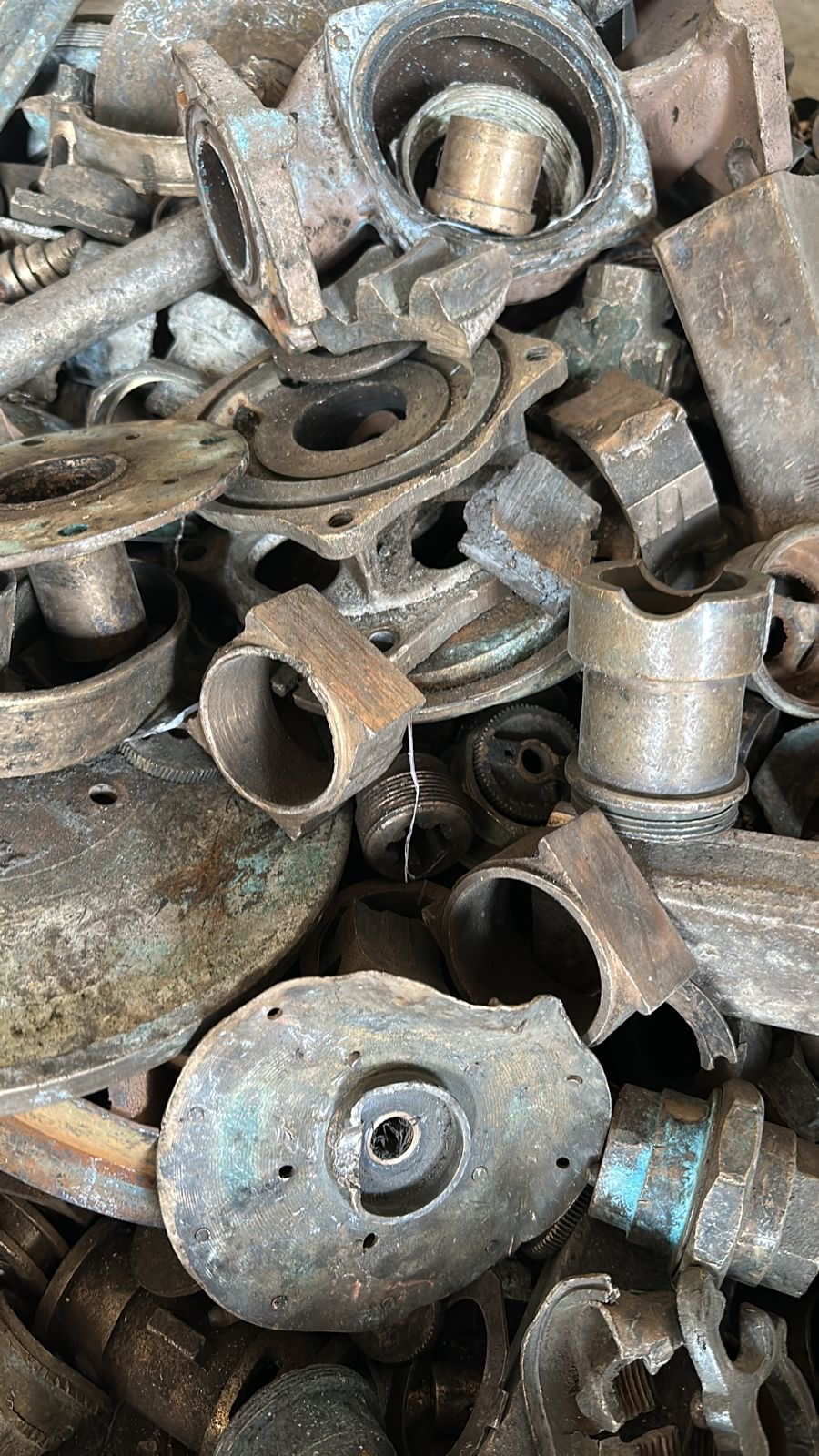
When offering red brass, one should carefully inquire about the proportion of red brass. In some cases, foreign merchants offer Ebony, but the actual quality of the goods contains a large amount of semi-red brass (as shown in the image below), far below the standard of Ebony, which can easily lead to claims. It is essential that the supplier provides actual product photos, which helps the buyer to identify and assess the quality of the goods and offer a reasonable price, otherwise, there is a high risk of claims or even returns.