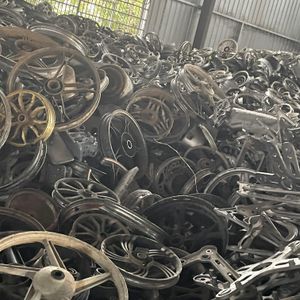
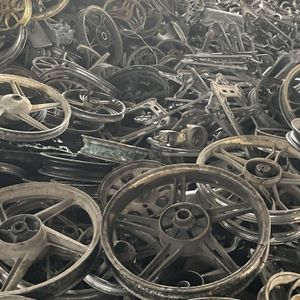
Motor Bike Wheels

Scrap Wiki

Automobile wheels are typically made of steel, other alloys, or aluminum alloys, and are the most common type of wheel used in the automotive industry.
Automobile wheel scrap is a common and relatively standardized type of scrap, with most automobile wheels on the market being made of A356.2 aluminum alloy through die-casting. This alloy is favored for its strength, durability, and lightness. The A356 aluminum alloy is primarily composed of aluminum (92.05% to 94.35%), but also contains silicon (6.5% to 7.5%) and other elements, such as iron, copper, magnesium, manganese, zinc, and titanium. This combination of elements provides the ideal properties for manufacturing wheels. In addition to A356, 6061, 7075, and 2024 aluminum alloys are also commonly used for forging aluminum wheels, mainly due to their good machinability. Although their heat-treated strength is lower, they are easy to polish and can be made into colorful and smooth wheels. Compared to cast aluminum wheels, forged aluminum wheels have higher strength and are often used for large vehicle wheels and sports cars.

A356 wheel, the most common type of wheel

For high-performance sports cars, trucks, and other vehicles with extremely high strength requirements, forged automobile wheels are often made of 7075 aluminum alloy, which is also a common material. This aluminum alloy has a high density but extremely high strength, excellent tensile strength, and hardness. Wheels made of this alloy material can ensure high safety and stability.
Common Classification

Automobile wheels can be divided into two types based on their manufacturing process: cast automobile wheels and forged automobile wheels.
Cast automobile wheels, such as A356, A357, and AlSi7Mg alloys, are commonly used. Among them, AlSi7Mg alloy is often used for wheels that meet European standards, which has similar components and performance to A356 and is a type of aluminum-silicon-magnesium alloy used for casting, with excellent comprehensive mechanical properties and corrosion resistance, making it suitable for producing high-quality automobile wheels. Cast wheels are widely popular due to their low cost and high design flexibility, but are generally heavier than forged wheels and have slightly lower mechanical properties.
Forged automobile wheels are primarily made of high-strength aluminum alloy materials, which provide the necessary durability and lightweight properties, as well as meeting aesthetic requirements. Commonly used aluminum alloy materials include 6061, 7075, and 2024. 6061 is one of the most commonly used aluminum alloys for forging automobile wheels, which is a type of aluminum alloy containing magnesium and silicon, with good machinability, excellent welding properties, and electroplating properties, good corrosion resistance, and high toughness. 7075 alloy is known for its exceptional strength and hardness, primarily used for high-performance vehicles or heavy-duty vehicles. 7075 alloy contains a higher proportion of zinc and is one of the strongest aluminum alloys. Although its corrosion resistance is not as good as 6061, it performs well under heavy loads and extreme conditions. 2024 aluminum alloy is primarily composed of copper, with excellent mechanical properties and good heat resistance, often used in the aerospace field, but also used for manufacturing high-performance automobile wheels. It has high fatigue strength but poor corrosion resistance and requires surface coating to improve.
There are also classifications based on sources, such as small vehicle wheels, truck wheels, etc.
Forging processing can increase density and uniformity, improve strength and wear resistance, and manufacture high-performance automobile wheels that are both lightweight and strong. Forged wheels have better structural integrity and lightweight advantages compared to cast wheels and are often used for high-performance and luxury vehicles.

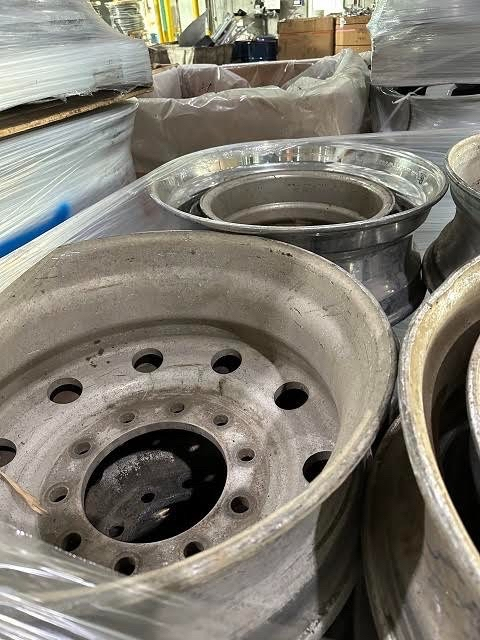
6061 truck wheel
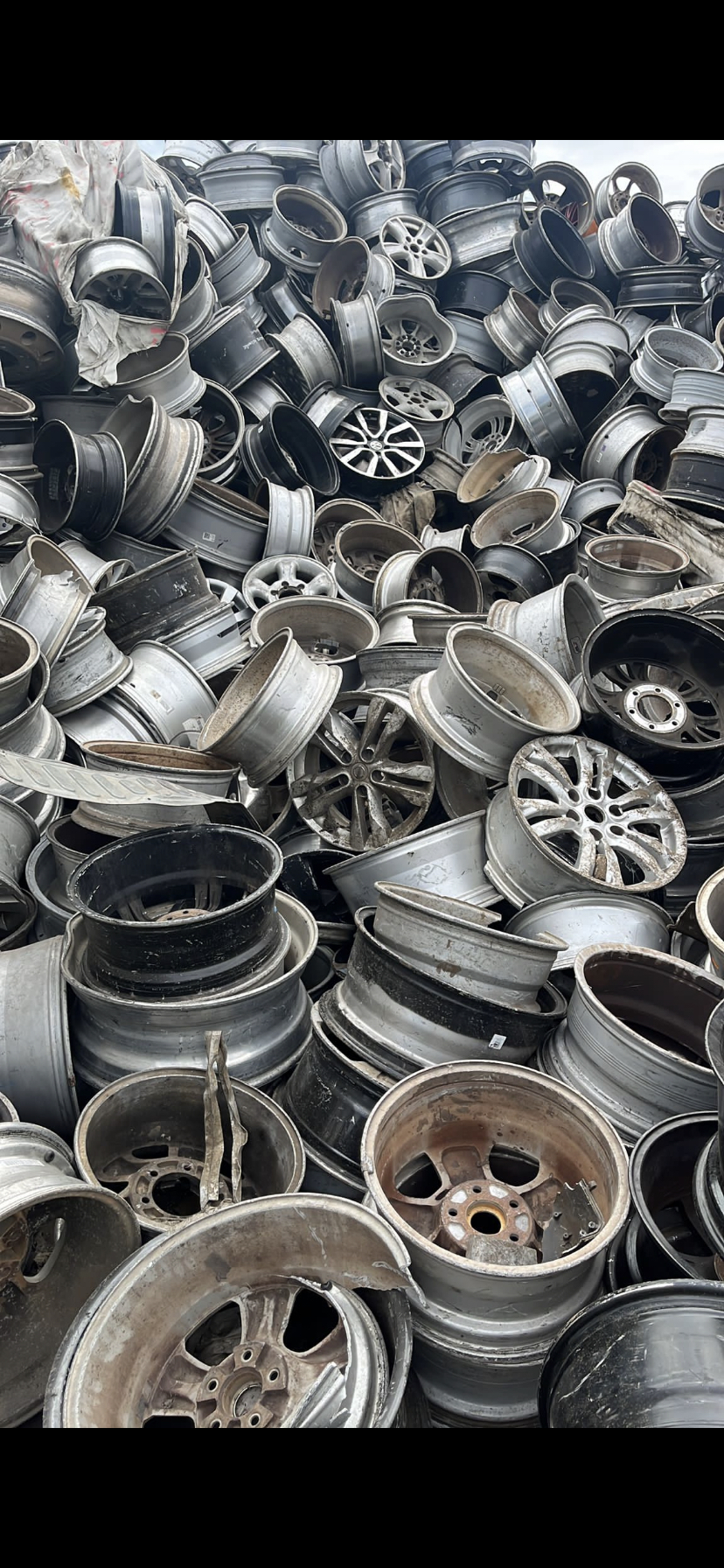
Small vehicle wheel

Common Sources

Similar to aluminum engine block scrap, automobile wheels are obtained from individual vehicle disassembly, so their sources are often related to the automotive industry. Such as car repair shops and scrap yards, dismantling factories, which are usually concentrated processing places for these scraps. In the United States, many car owners repair and replace tires themselves, so there are also individual sales of scrap automobile wheels.
In addition to scrap wheels, defective products from automobile wheel manufacturers are also an important source of wheel scrap.

Value Points

Which types of wheel scrap have higher value?
1. Uniform source of wheel scrap
Such as waste wheel products directly from production factories or maintenance factory sources from a single brand wheel. The value of wheel scrap with a uniform source is higher. Because they can be fully utilized without sorting.
2. Uniform material of wheel scrap
After classification, sorting, and even testing with a handheld spectrometer, the aluminum alloy material of the wheel scrap can be uniform, making its value higher. Wheel scrap with uniform material is suitable for reuse.
3. Clean and free of impurities
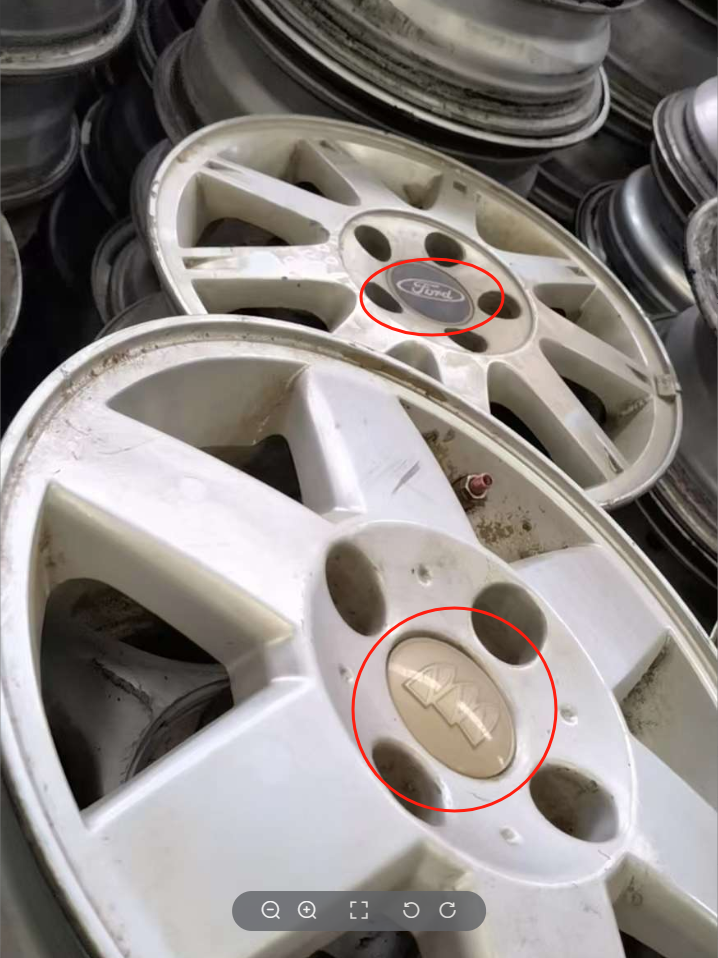
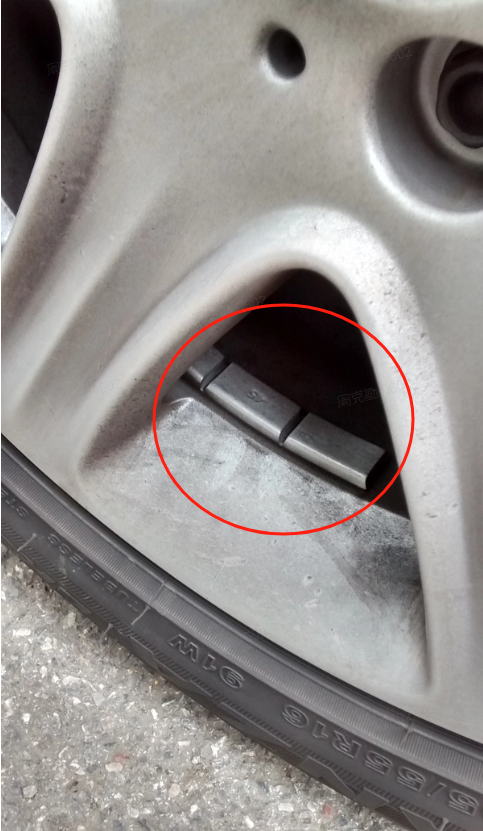
Clean refers to less dirt and oxidation, and free of impurities means removing wheel weights (mostly iron or lead) and iron screws, decorative cover plates, etc.

Decorative cover plate not removed
  1. No paint or chrome plating
    Painting or chrome plating the wheels can enhance the visual effect and also has a corrosion-resistant effect, commonly used for high-end vehicles or modified vehicles. However, the value of painted or chrome-plated wheels is affected and reduced. Wheels with painted or baked finishes are prohibited from being imported into countries like China due to smoke and pollution during regeneration. Chrome-plated wheels, due to their chromium content and difficulty in separation, will affect the elemental content of recycled aluminum alloys.
Chrome-plated wheel scrap, lower value

Processing Methods

The processing methods for automobile wheel scrap mainly include:
1. Manual disassembly
Using manual disassembly to remove iron screws, lead or stainless steel weights, and decorative cover plates.
2. Mechanical crushing
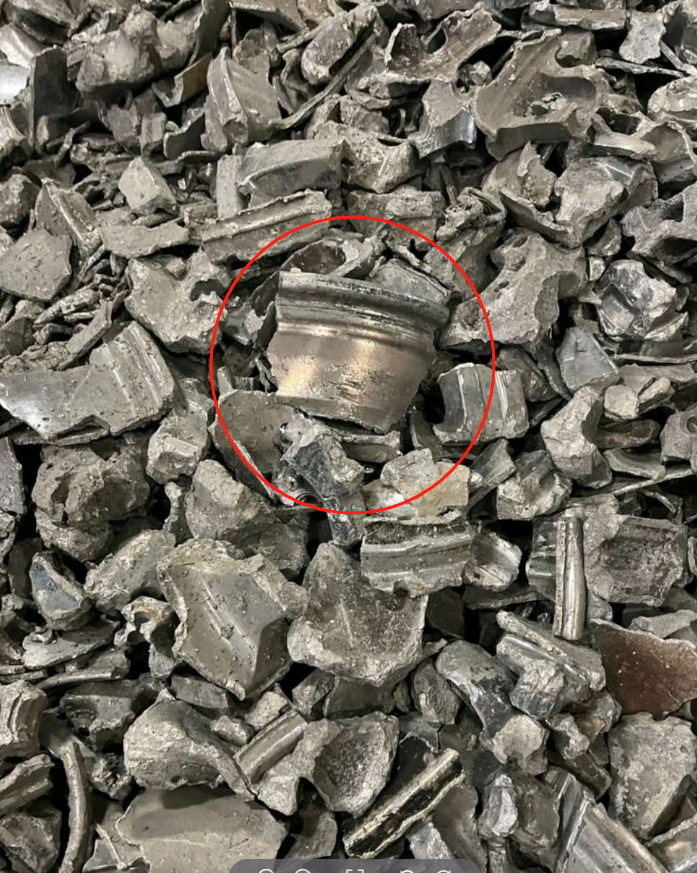
Automobile wheels are mechanically crushed, mainly to compress the volume. Automobile wheels have a hollow structure, wasting transportation space. After crushing, the materials can be stacked, greatly saving volume and transportation costs.
3. Polishing
Specifically for wheels with paint or chrome plating. Painted or chrome-plated wheels not only affect the material's own use value but also have customs clearance and customs declaration issues, such as China's customs not allowing the importation of painted or chrome-plated automobile wheel scrap.

Detection Methods

Matching Direction

According to the alloy series, high-quality automobile wheel scrap that has been sorted is prioritized for reuse by production factories. Based on their specific material, die-cast automobile wheel scrap can be matched to wheel manufacturers, engine manufacturers, or A356-marked die-cast aluminum ingot production factories; forged automobile wheel scrap can be matched to corresponding wheel manufacturers based on their specific mark. 6061 wheels can be matched to profile factories, door and window factories.
If it is a mixed automobile wheel that has not been sorted, it can only be downgraded for use. Suitable buyers are manufacturers of die-cast ingots, such as standard or non-standard ADC12, A356 aluminum ingots.

Special Attention

When inspecting the goods, attention should be paid to details such as whether the screws are completely removed and whether the weights (usually lead) are removed. Additionally, whether there are different series mixed, and whether there are painted or chrome-plated surfaces should also be noted.

Chrome-plated wheel scrap, lower value

Gallery

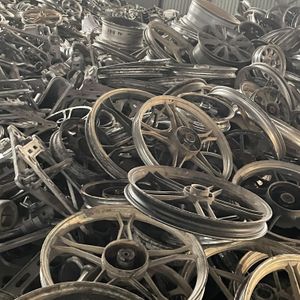
Motor Bike Wheels
Motor Bike Wheels
Motor Bike Wheels
Motor Bike Wheels
Motor Bike Wheels
Motor Bike Wheels
Motor Bike Wheels
Back to Parent Category