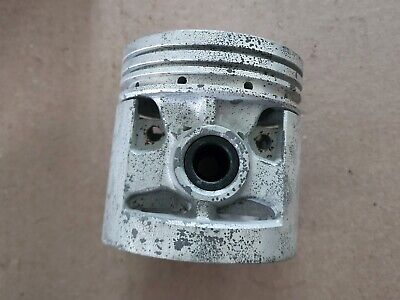
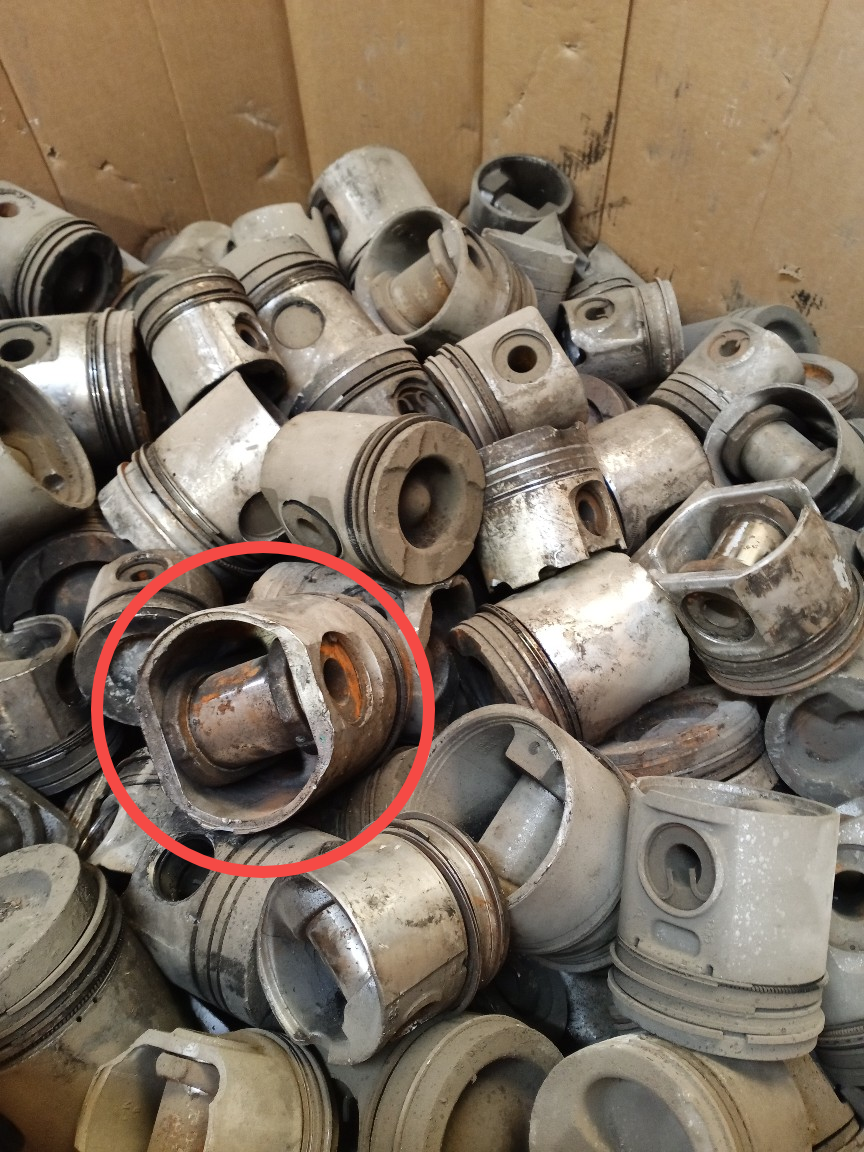
Aluminum pistons (Tarry)

Scrap Wiki

"Piston aluminum" typically refers to the aluminum alloy used in the piston head of an engine. When it is scrapped or discarded as a defective product, it becomes a piston aluminum waste. The piston is a critical component of an engine, responsible for reciprocating motion in the cylinder, converting the energy generated by fuel combustion into mechanical work. Due to the excellent properties of aluminum alloys, such as light weight, high thermal conductivity, and good machinability, they are widely used in piston manufacturing.
Piston aluminum alloys typically require the following properties:
1. Good strength and hardness: to withstand the high pressure and temperature during engine operation.
2. High-temperature resistance: to maintain mechanical properties over a long period in high-temperature environments.
3. Moderate thermal expansion coefficient: to match the thermal expansion coefficient of the engine cylinder body material.
4. Good wear resistance: to reduce friction and wear with the cylinder wall.
5. Corrosion resistance: to resist corrosion caused by fuel and lubricating oil.
Piston manufacturers select suitable aluminum alloys based on the specific engine requirements and further enhance the piston's performance through alloying, heat treatment, and surface treatment.
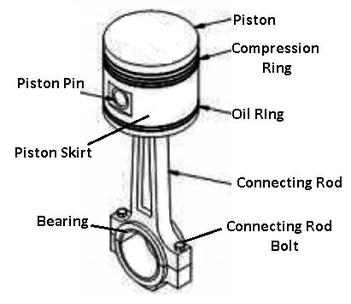
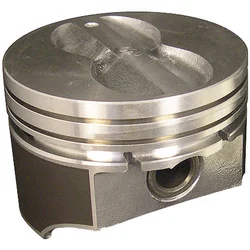
In the ISRI naming system, piston aluminum waste is named "Tarry," which includes three subcategories: A, B, and C. Tarry A is clean aluminum pistons, containing only clean aluminum pistons without rods, sleeves, shafts, iron rings, and other non-metallic materials (although 2-4% iron impurities may be present in practice). The oil content does not exceed 2%. Tarry B is clean aluminum pistons with rods, containing only clean aluminum pistons with rods, without sleeves, shafts, iron, and other non-metallic materials. The oil content does not exceed 2%. Tarry C is aluminum pistons with iron, containing aluminum pistons and non-aluminum impurities. Simply put, the difference between Tarry A and B is the presence or absence of rods, while the difference between Tarry A/B and C is the presence of iron in Tarry C.
Common Classification

Piston aluminum waste is primarily classified based on the aluminum alloy type, including:
1. Aluminum-silicon alloy (Al-Si): This is the most commonly used aluminum alloy for pistons, particularly those with high silicon content, such as 4032 (containing approximately 12% silicon) and 2618 alloys. High silicon content improves wear resistance and strength while providing a relatively low thermal expansion rate, which is crucial for maintaining the proper clearance between the piston and cylinder wall.
2. Aluminum-copper alloy (Al-Cu): This alloy typically contains 4-6% copper and may also include magnesium, iron, and silicon to enhance its strength. An example of an aluminum-copper alloy is 2618, which has excellent thermal stability and resistance to thermal cracking.
3. Aluminum-magnesium alloy (Al-Mg): Although less common than the above alloys, aluminum-magnesium alloys may be used in specific applications for pistons.
4. Aluminum-zinc alloy (Al-Zn): This alloy may also be used for high-performance pistons, particularly when higher strength and hardness are required.
5. Aluminum-nickel alloy (Al-Ni): Some high-performance pistons may use nickel-containing aluminum alloys, as nickel can enhance the alloy's high-temperature performance.

Common Sources

Piston aluminum waste can be collected from the following sources:
1. Automotive dismantling plants: During the dismantling process of scrapped vehicles, engines are disassembled, and their components, including piston aluminum, are dismantled into smaller parts.
2. Maintenance and service centers: When engine maintenance is performed, and pistons are damaged or need to be replaced, the old aluminum pistons become waste.
3. Manufacturing waste: During engine manufacturing, waste may be generated, including defective piston products.
4. Scrapped mechanical equipment: In addition to vehicles, other equipment and machinery (such as motorcycles, ships, generators, agricultural machinery, etc.) also use aluminum alloy pistons, which can generate piston aluminum waste when they are scrapped.

Value Points

Piston aluminum is a relatively standardized aluminum waste. According to the ISRI classification method, the value of piston aluminum waste primarily comes from its cleanliness. The more attachments, such as rods, the lower the value. The aluminum alloy composition of piston aluminum waste is relatively pure, and the recovery rate of the metal can be extremely high, typically exceeding 90%. If mixed with rods, sleeves, shafts, and other iron impurities, the relative value will be significantly affected.

Packaging method: Pressed
Packaging method: Bundled
Packaging method: Cut

In the trading process, the following factors may affect the value of piston aluminum waste:
1. Contaminants: Waste materials such as oil, coatings, plastics, rubber, and other non-metallic materials may reduce the recovery rate. These contaminants should be removed as much as possible before melting.
2. Alloy composition: Piston aluminum alloys may contain silicon, magnesium, copper, and other alloying elements. If the waste comes from the same source and has the same alloy number, the price will be higher.
3. Iron impurities: Piston aluminum inevitably contains iron impurities, even if it is clean, with an iron content of 2-4%. To purify the aluminum alloy, physical or magnetic separation is required.

Processing Methods

Tarry A-grade piston aluminum waste can be directly used in the furnace without special processing or pre-treatment. However, Tarry B or C piston aluminum waste with rods, sleeves, shafts, and other iron impurities requires some pre-processing before use.
The most common processing method is manual disassembly or crushing. Manual disassembly is suitable for mixed waste with a small amount of iron-containing piston aluminum. Manual sorting can be used to remove iron-containing waste, and then the waste can be disassembled by hand. However, if the entire batch of waste is iron-containing piston aluminum, manual disassembly is inefficient and time-consuming. In this case, machine crushing is the best method. After crushing, the internal iron impurities can be separated, and then the iron impurities can be removed using magnetic separation equipment. The processed piston aluminum waste becomes a product similar to crushed aluminum. However, crushing causes a loss of metal, approximately 2-3%.
There is also a method of directly using iron-containing piston aluminum waste in the furnace and then removing the iron impurities from the bottom of the furnace after melting. This method is suitable for piston aluminum waste with a low iron content. The advantage of this method is that it does not require time-consuming manual sorting and disassembly. However, the disadvantage is that the iron impurities will absorb some aluminum on the surface, resulting in a loss of aluminum recovery rate, which depends on the specific iron content, ranging from 1-5%.

Detection Methods

Matching Direction

Piston aluminum waste is suitable for matching with aluminum casting production enterprises. Piston aluminum waste has a special feature: it contains nickel.
The presence of nickel in piston aluminum waste is usually related to the manufacturing process and design of the pistons. Pistons are a critical component of engines, which must withstand high temperatures, high pressures, and high-speed friction. To meet these requirements, pistons may use nickel-enhanced aluminum alloys or apply a nickel-containing coating to the surface to form a wear-resistant layer. These treatments help the piston maintain its performance and lifespan under harsh working conditions. Therefore, when the piston reaches the end of its service life and is recycled as waste, the waste may contain nickel.
The Chinese standard ZL109 for die-casting aluminum ingots requires 0.8-1.5% nickel content. Therefore, piston aluminum waste is more valuable when matched with enterprises producing ZL109 aluminum ingots.

Special Attention

In the trading of clean piston aluminum waste, it is essential to pay attention to whether it contains iron impurities.

Gallery

Aluminum pistons (Tarry)
Back to Parent Category