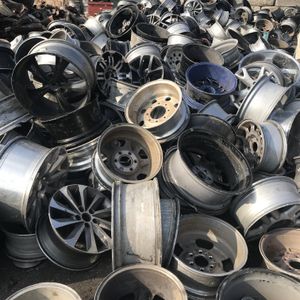
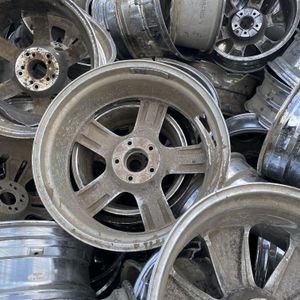
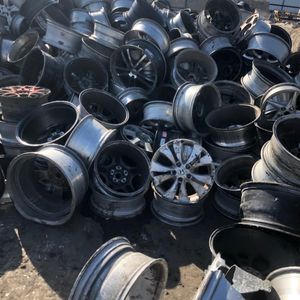
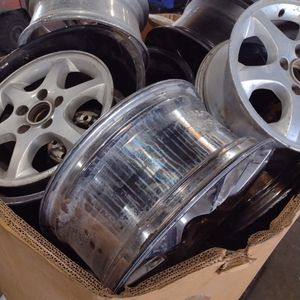
Clean wheels

Scrap Wiki

Common automobile wheels are typically made of steel, other alloys, or aluminum alloys. Automobile wheels are the most widely used type in the automotive industry.
Automobile wheel waste is a relatively common and nearly standardized type of waste. The market's main automobile wheels are primarily made of A356.2 aluminum alloy by die-casting. This alloy is favored due to its strength, durability, and light weight. The A356 aluminum alloy is primarily composed of aluminum (92.05% to 94.35%), but also contains silicon (6.5% to 7.5%) and other elements, such as iron, copper, magnesium, manganese, zinc, and titanium. This combination of elements provides the ideal properties for manufacturing wheels. In addition, 6061, 7075, and 2024 aluminum alloys are also common materials used to make forged aluminum wheels, mainly due to their good machinability. Their heat-treated strength is relatively low, but they are easy to polish, making them ideal for producing colorful and smooth wheels. Compared to casting aluminum wheels, forged aluminum wheels have higher strength, commonly used in large vehicle wheels and sports cars with high wheel requirements.

A356 wheel, the most common wheel

For high-performance sports cars, trucks, and other vehicles with extremely high strength requirements, forged automobile wheels are typically made of 7075 aluminum alloy, which is also a common material. This aluminum alloy has a higher density but is extremely strong, with excellent tensile and hardness properties. Wheels made from this alloy material can guarantee higher safety and stability.
Common Classification

Automobile wheels are divided into two types based on different production processes: casting and forging.
Casting automobile wheels, such as A356, A357, and AlSi7Mg alloys. Among them, AlSi7Mg alloy is commonly used in European-standard wheels, which have similar composition and performance to A356 and are aluminum-silicon-magnesium alloys used for casting. This alloy provides excellent comprehensive mechanical properties and corrosion resistance, making it suitable for producing high-quality automobile wheels.
Forged automobile wheels mainly use high-strength aluminum alloys, which not only provide the required durability and lightweight properties but also meet aesthetic requirements. Commonly used aluminum alloys include 6061, 7075, and 2024. 6061 is one of the most commonly used aluminum alloys for forging automobile wheels. The 6061 alloy is an aluminum alloy containing magnesium and silicon, which has good machinability, excellent welding properties, and electroplating properties, good corrosion resistance, and high toughness. The 7075 alloy is renowned for its exceptional strength and hardness, mainly used in high-performance vehicles or heavy-duty vehicles. The 7075 alloy contains a higher percentage of zinc and is one of the strongest aluminum alloys. However, its corrosion resistance is not as good as 6061, but it performs exceptionally well under heavy loads and extreme conditions. The 2024 aluminum alloy mainly contains copper, which has excellent mechanical properties and good heat resistance. It is commonly used in the aerospace field but can also be used to manufacture high-performance automobile wheels. Its fatigue strength is high, but its corrosion resistance is poor, requiring surface plating to improve.

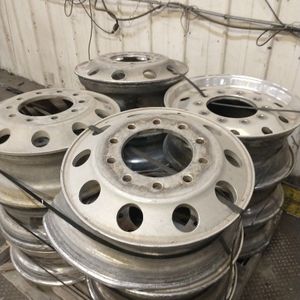
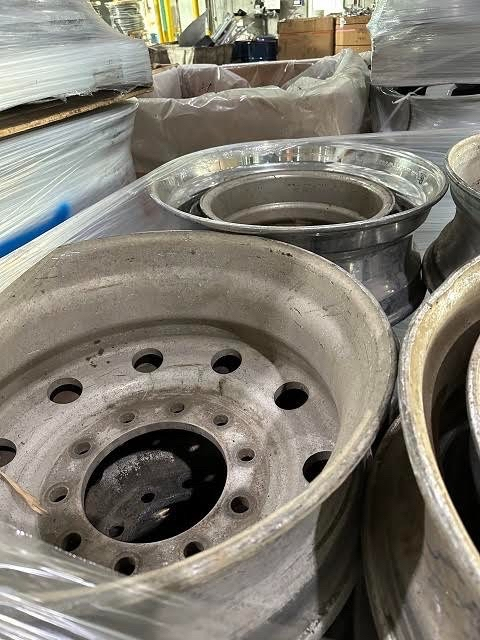
6061 truck wheel
Small car wheel

Common Sources

Similar to aluminum engine block waste, automobile wheels come from the disassembly of automobiles, so their sources are often related to the automotive industry, such as automobile repair shops, scrapping yards, and disassembly plants, which are usually the places where these wastes are concentrated. In the United States, many car owners repair and replace their tires, so individual owners also occasionally sell waste automobile wheels.
In addition to scrapped wheels, the defective products from automobile wheel manufacturers are also an essential source of wheel waste.

Value Points

What kind of wheel waste has higher value?
1. Uniform source of wheel waste
Directly from the production factory's eliminated wheel waste or maintenance factory's single-brand wheel waste. Wheel waste with a uniform source has higher value because they do not need to be sorted and can be directly used for recycling.
2. Uniform material of wheel waste
After classification, sorting, and even inspection with a handheld spectrometer, the aluminum alloy material of the wheel waste can be uniform, making their value higher. Uniform material automobile wheels are suitable for recycling.
3. Clean and free of impurities
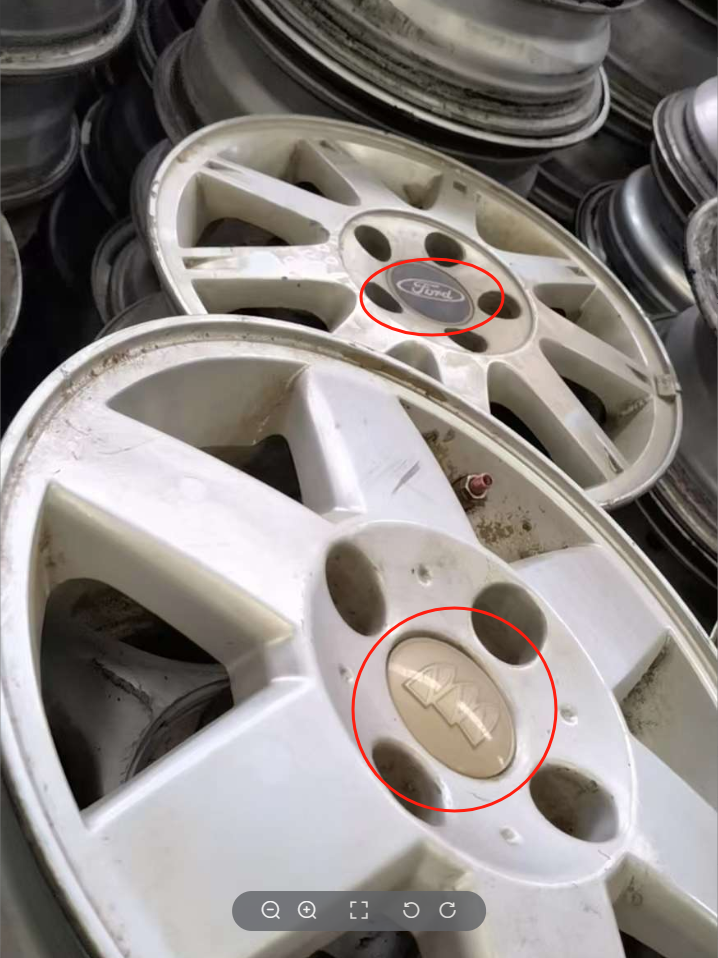
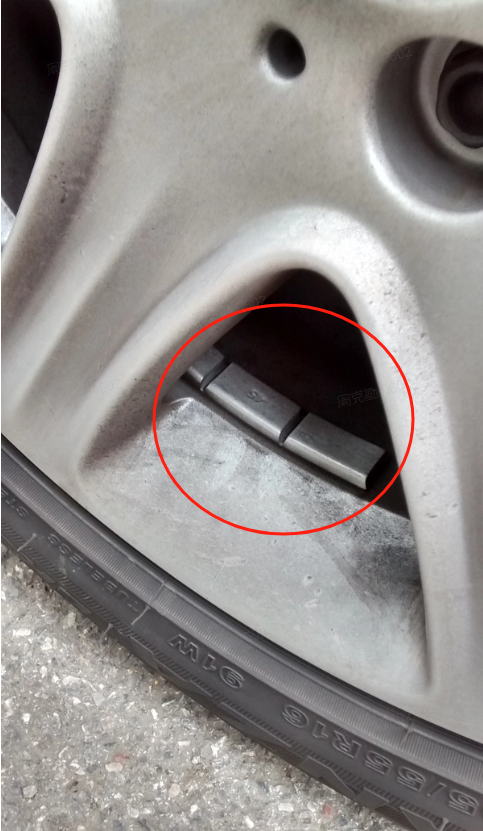
Clean means less dirt and oxidation, and free of impurities means removing the wheel weights (mostly iron or lead) and iron screws, decorative cover plates, etc.

Decorative cover plate not removed
  1. Free of paint and chrome
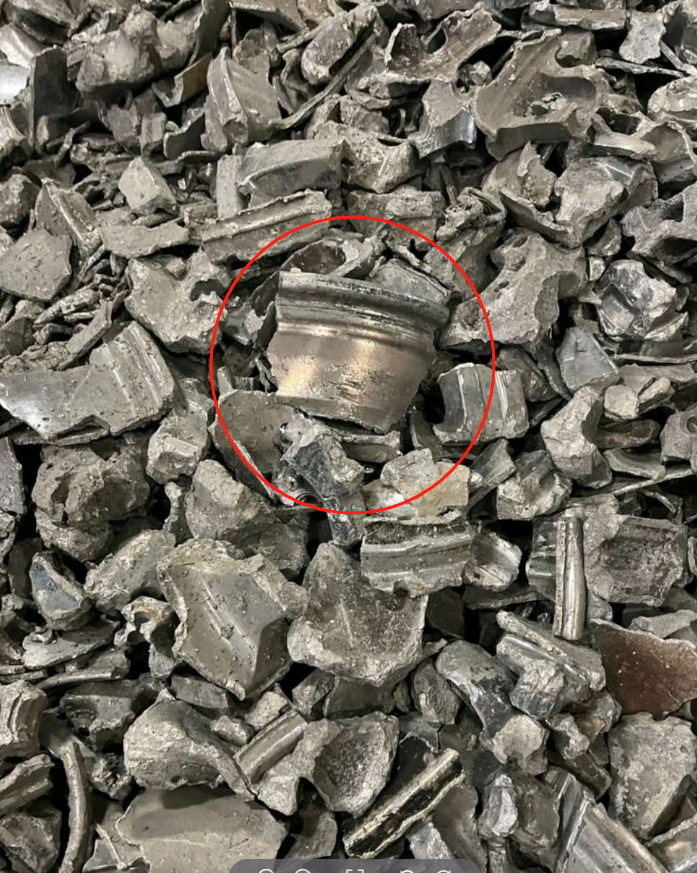
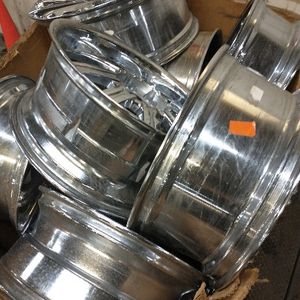
    Wheel painting or chrome plating can improve the wheel's appearance and have an anti-corrosion effect, commonly used in high-end cars or modified cars. However, the value of painted or chrome-plated wheels will be affected and reduced. Wheels with a painted or baked finish are not allowed to be imported into countries like China due to smoke and pollution during regeneration. Chrome-plated wheels are difficult to separate and will affect the elemental composition of the regenerated aluminum alloy.
Chrome-plated wheel fragment, lower value

Processing Methods

The processing methods for automobile wheel waste mainly include:
1. Manual disassembly
Using manual disassembly to remove iron screws, lead or stainless steel weights, and decorative cover plates.
2. Mechanical crushing
Automobile wheels are crushed mechanically, mainly to reduce volume. Automobile wheels have a hollow structure, wasting transportation space. After crushing, the materials can be stacked, greatly reducing volume and transportation costs.
3. Polishing
Specifically for wheels with paint or chrome plating. Wheels with paint or chrome plating not only affect the material's value but also have customs clearance issues, such as China's customs not allowing painted or chrome-plated automobile wheel waste to be imported.

Detection Methods

Matching Direction

High-quality automobile wheel waste that has been sorted by alloy series is prioritized for matching with manufacturers that use recycled materials. According to their specific materials, die-casting automobile wheel waste can be matched with wheel manufacturers, engine manufacturers, or A356 aluminum alloy manufacturers; forged automobile wheel waste can be matched with corresponding wheel manufacturers based on their specific alloy numbers. 6061 wheels can be matched with profile factories, door and window factories.
If it is a mixed automobile wheel that has not been sorted, it can only be used for downcycling. Suitable buyers are manufacturers of casting ingots, such as standard or non-standard ADC12, A356 aluminum ingots.

Special Attention

When inspecting the goods, attention should be paid to details such as whether the screws have been completely removed, whether the weights (usually lead) have been removed, whether there are different series mixed, and whether there are paint or chrome plating on the surface.

Chrome-plated wheel fragment, lower value

Gallery

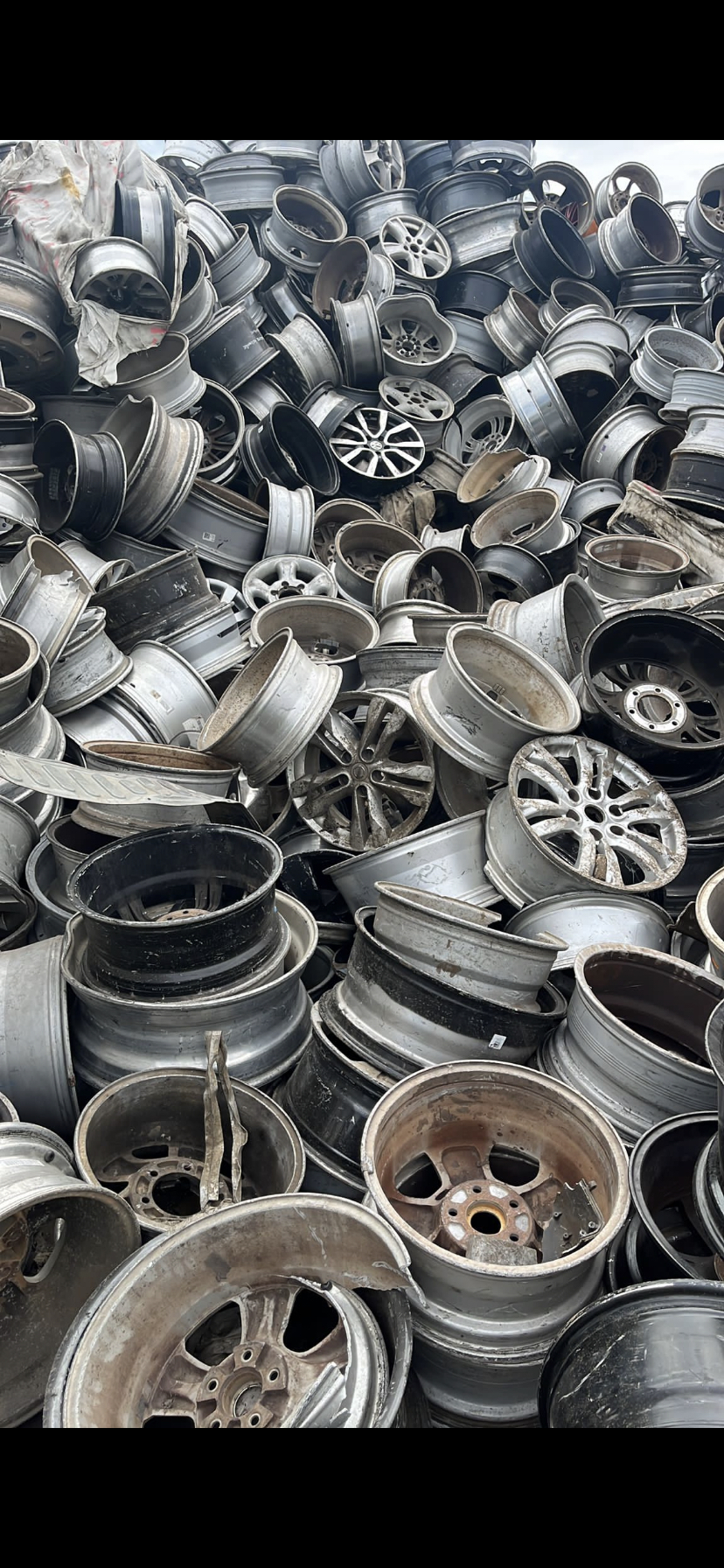
Clean wheels
Clean wheels
Clean wheels
Clean wheels
Clean wheels
Clean wheels
Clean wheels
Back to Parent Category