Scrap Wiki

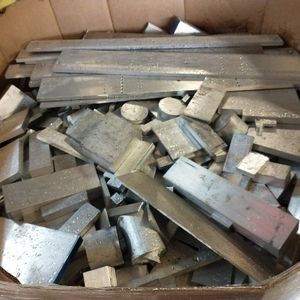
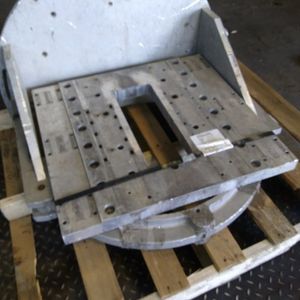
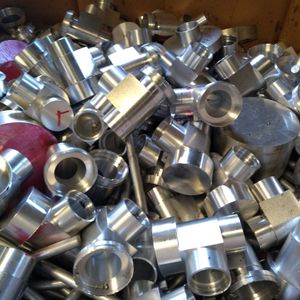
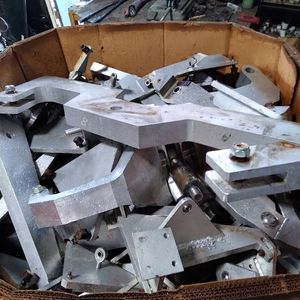
Aluminum alloy sheet is a very broad and common aluminum alloy product with a wide range of applications and various materials. In the American ISRI scrap nomenclature, there are several corresponding names for aluminum alloy sheets. Clean, high-grade aluminum alloy sheets without any coatings are generally referred to as Tough-Taboo.
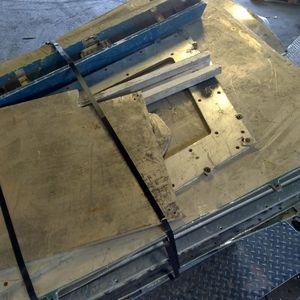
Within the category of Tough-Taboo, some materials may be specifically labeled as "low copper aluminum sheet scrap," commonly referred to as MLC (Mixed Low Copper). This usually refers to mixed aluminum alloy sheets that do not contain 2000 or 7000 series alloys, with copper content typically below 2-3%. MLC scrap may come from various aluminum alloy products. Since it is difficult to separate the copper elements from aluminum alloys through processing, it is important to separate high-copper aluminum alloys from other series during the recycling and sorting stages to avoid affecting the overall quality and value.
In fact, Tough and Taboo in ISRI refer to two different types of aluminum alloy scrap:
Tough refers to mixed, new aluminum alloy clippings and solid aluminum alloys, which include new, clean, uncoated, and unpainted aluminum scrap from two or more aluminum alloys, with a minimum thickness of 0.38mm. It does not contain thin wire, mesh, dirt, or other non-metallic materials. Oil or grease content should not exceed 1%, and no punchings smaller than 1.27cm are allowed.
Taboo refers to mixed low-copper aluminum clippings and solid scrap, which include new, clean, uncoated, and unpainted low-copper aluminum scrap from two or more alloys, with a minimum thickness of 0.38mm. It does not contain 2000 and 7000 series alloys, thin wire, mesh, punchings smaller than 1.25cm in diameter, dirt, or other non-metallic materials. Oil or grease content should not exceed 1%.
The difference between the two is that Taboo is restricted to low-copper materials (MLC), while Tough has no such restriction.
Since Tough (solid aluminum alloy clippings) are often sold together with Taboo (solid aluminum alloy sheets), they are commonly referred to as Tough-Taboo. As this category contains a large amount of aluminum alloy sheet scrap, we will include these materials in the discussion of aluminum alloy sheets.

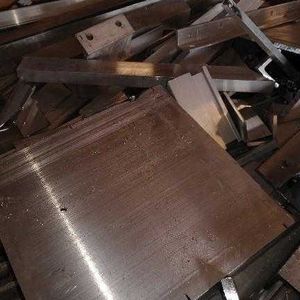
MLC1
MLC1
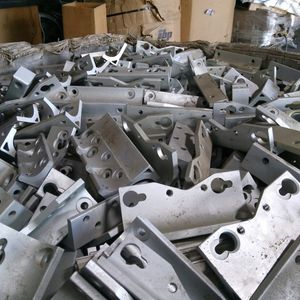
MLC2
MLC2

Common Classification

The scope and variety of aluminum alloy sheet scrap are vast, making it difficult to establish a perfect classification system that covers everything comprehensively. Based on common classifications in daily scrap work, the following are often used:
1. Classification by Alloy Series
Single-series scrap, such as 1XXX, 2XXX, and 3XXX series aluminum alloy sheet scrap, and mixed scrap like MLC (Mixed Low Copper aluminum sheet scrap), are common classification methods.
2. Classification by Contamination Level
Various aluminum alloy sheets can be classified based on the level of contamination: completely clean (Clean) aluminum alloy sheets (typically defined as scrap with almost no contamination or less than 1% impurities) and contaminated aluminum alloy sheets, which can be labeled with specific impurity percentages such as "2% impurities" or "5% impurities."
3. Classification by Surface Condition
Aluminum alloy sheet scrap can be categorized as completely bare (without paint or coating), also known as Mill Finish or Bared, or as painted/coated (Painted) aluminum alloy sheet scrap. Additionally, there are mixed types that combine bare and painted scrap (Mixed).
4. Certain Specific Types of Aluminum Alloy Sheet Scrap
Some specific types of aluminum alloy sheet scrap form their own category due to their unique structure, such as aluminum composite panels (Alucobond), which are made from aluminum and plastic and differ from other aluminum sheets. Similarly, highway road signs and vehicle license plates, due to their material consistency (highway signs are typically 6061, while vehicle plates are often 5005 or 5052), are classified into their own categories based on their source (e.g., highway road signs, vehicle license plates).

Common Sources

Aluminum alloy plate scrap mainly comes from the following types of sources:
1. Industrial waste: This includes waste generated during the production process, such as cutting aluminum alloy blocks or panels, which can produce a large amount of Tough-taboo scrap.
2. Construction waste: In the construction industry, used aluminum alloy plates from building demolition or renovation, such as roofing, doors, windows, and fencing, can generate a large amount of aluminum alloy plate scrap.
3. Household waste: Household appliances like refrigerators, washing machines, and air conditioners can produce aluminum alloy plate scrap when they reach the end of their life cycle.
4. Special waste: Government agencies, such as transportation departments, can generate a large amount of aluminum alloy scrap from highway signs and license plates.

Value Points

The value of aluminum alloy plate scrap lies in the following aspects:
1. Alloy number: Single-series alloys are generally more valuable than mixed alloys.
2. Contamination level: The lower the contamination level, the higher the value.
3. Type of contamination: The type of contamination, such as iron or copper, can affect the value.
4. Surface condition: Bare aluminum alloy plates are generally more valuable than painted or coated ones.
5. Thickness: The thickness of the material can affect its value, with thicker materials being more valuable.

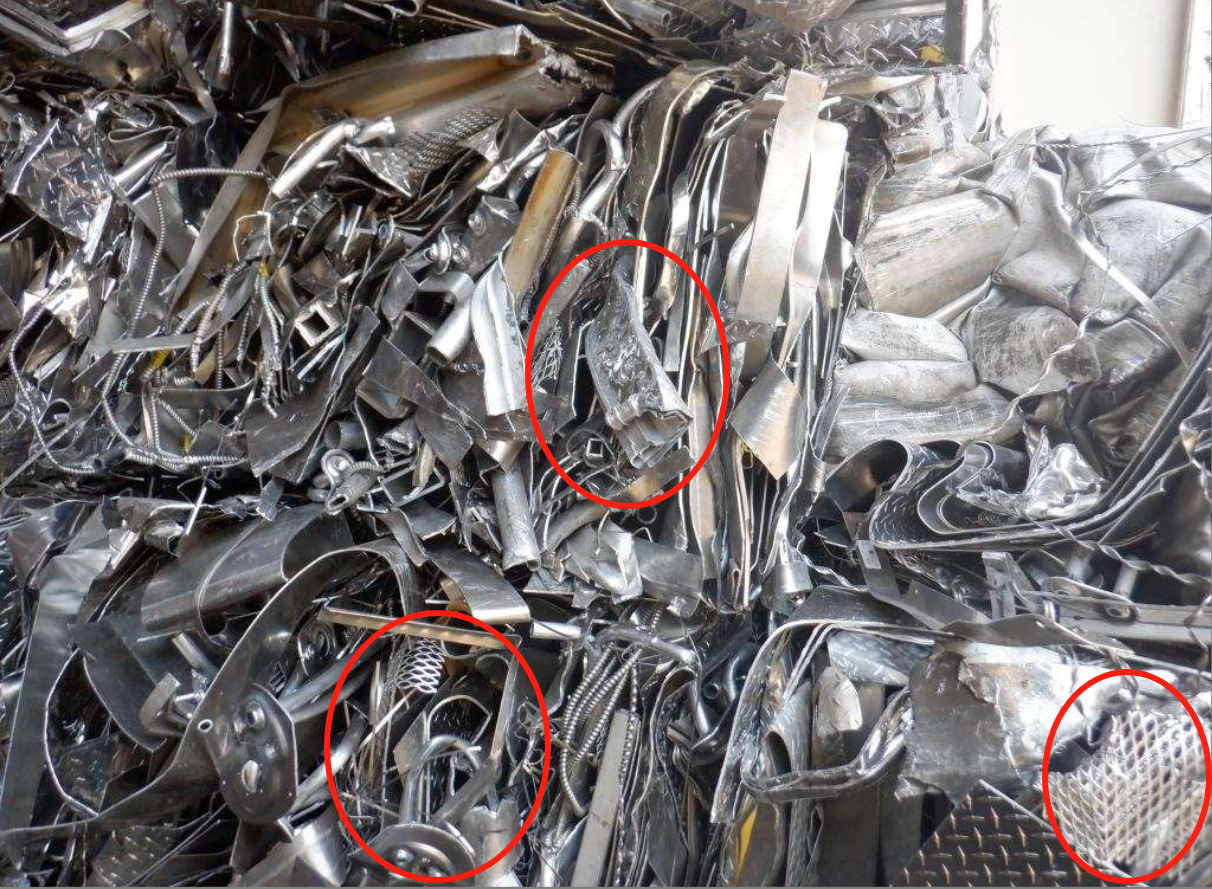
The mesh, thin wires, and non-solid aluminum (profiles) marked in the red circle should not be included in high-grade aluminum sheets
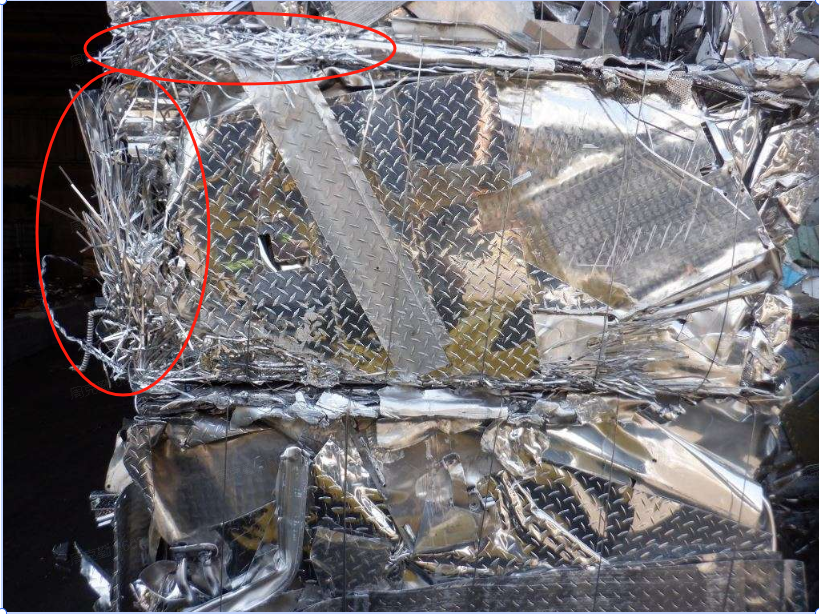
The thin wires marked in the red circle have a relatively low metal recovery rate
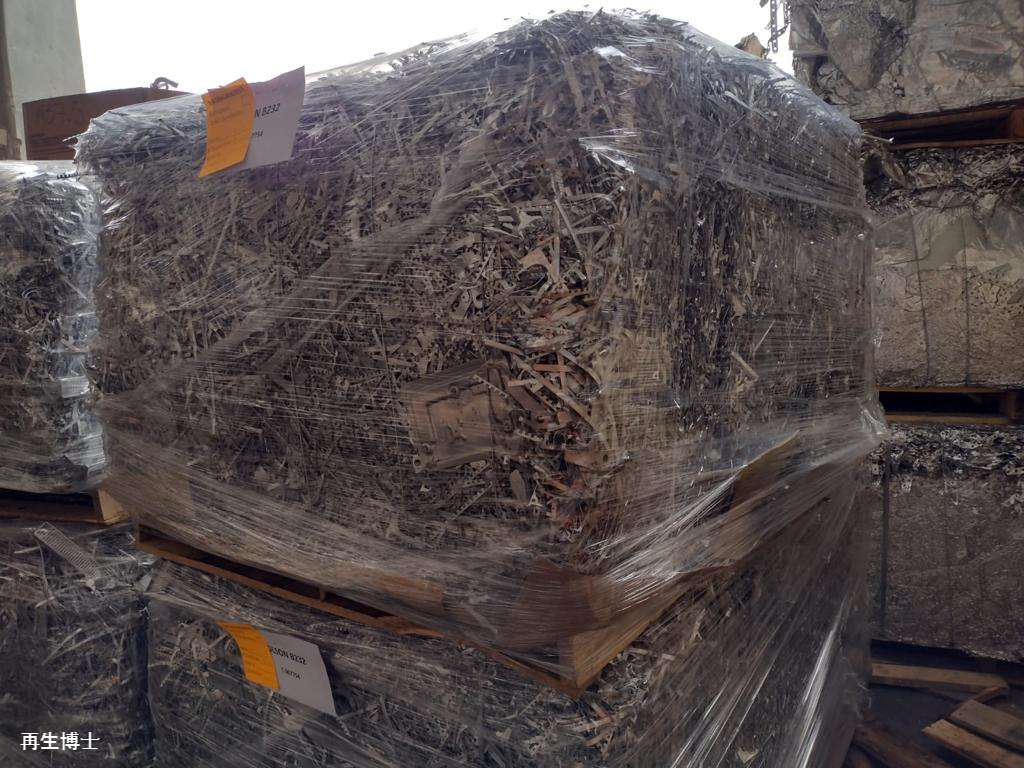
The material is finely fragmented, significantly reducing its value
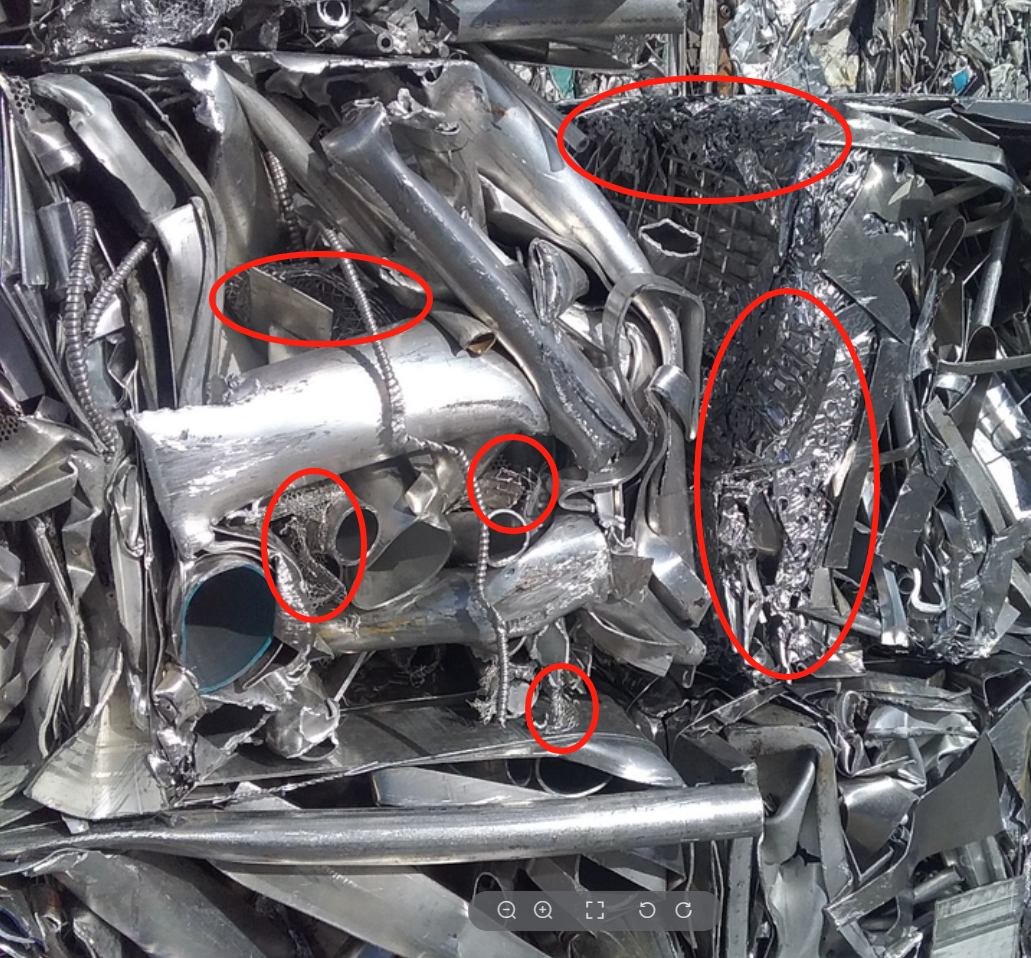
A large amount of hollow aluminum tubes, finely fragmented aluminum wires, and aluminum foil affect the value of the goods

Processing Methods

  1. Manual sorting: Manual sorting is necessary to improve the quality of aluminum alloy plate scrap. Sorting can be done based on alloy number, contamination level, and surface condition.
  2. Packaging: Aluminum alloy plate scrap can be packaged in different ways, including baling, loose packaging, or using paper boxes or ton bags.
  3. Crushing and sorting: Some contaminated aluminum alloy plates may undergo crushing and mechanical sorting to reduce contamination and improve their value.

Detection Methods

The detection of aluminum alloy plate scrap typically involves metal recovery rate testing, which can be done through sampling and crucible melting. The metal recovery rate is calculated by dividing the actual weight of aluminum recovered by the total weight of the sample. If the contamination rate needs to be detected, manual disassembly and sorting can be performed.
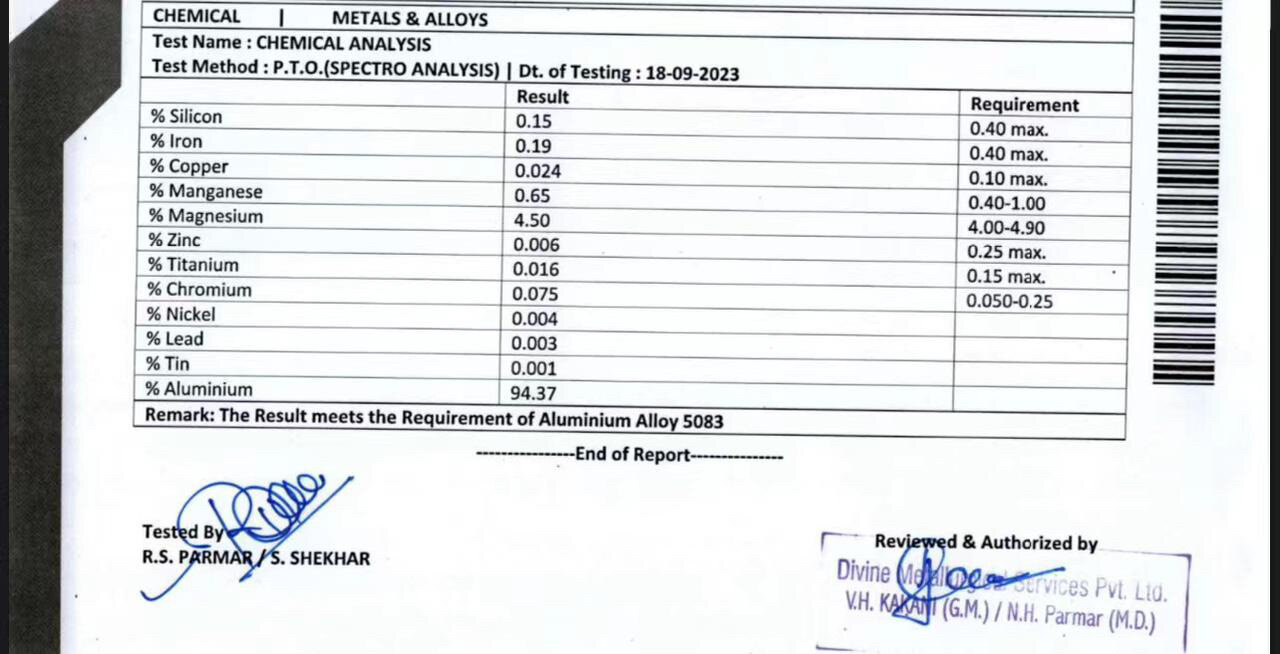
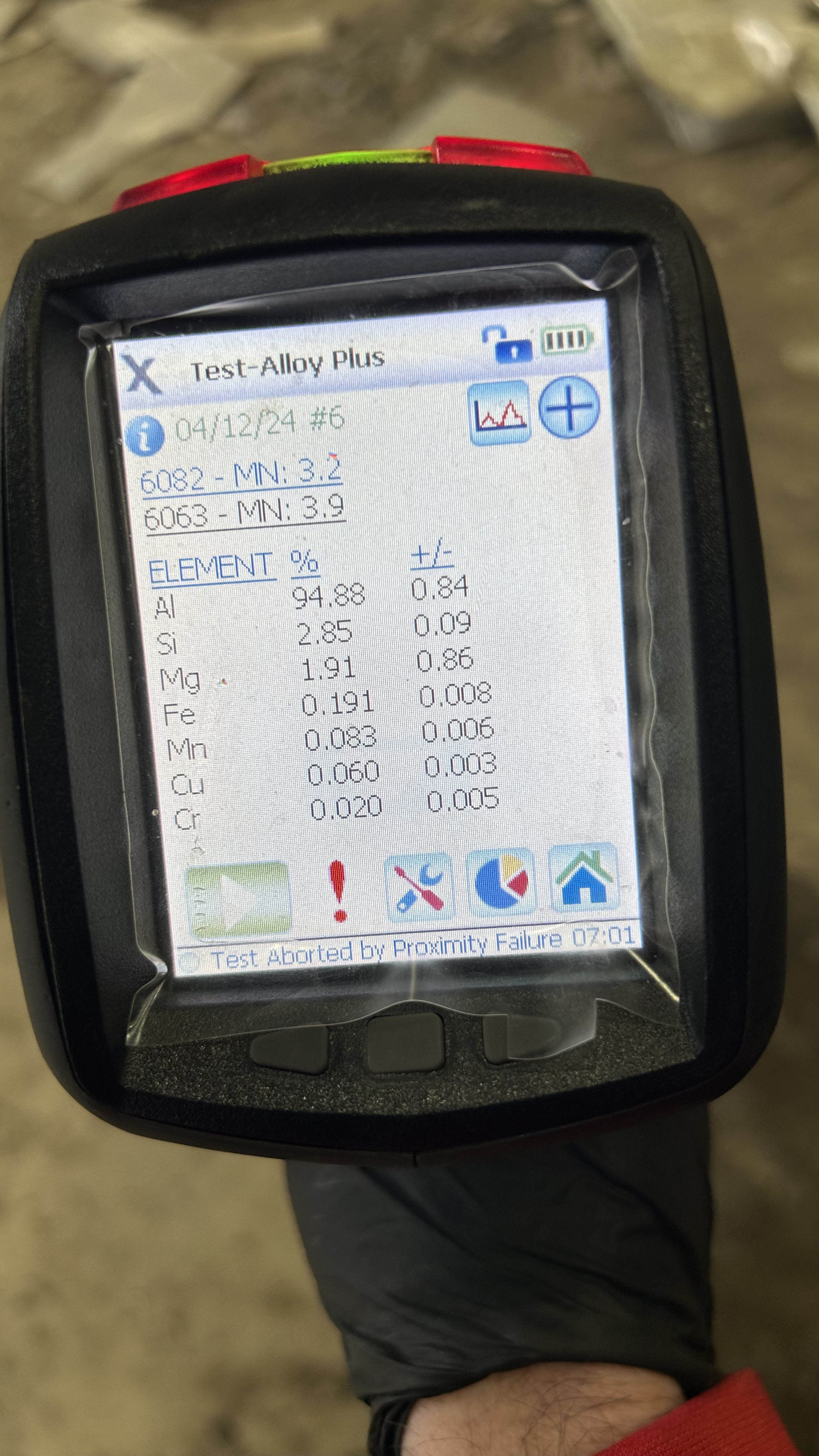
Elemental composition and alloy number detection can also be performed using handheld spectrometers. Providing detailed detection reports or handheld spectrometer readings can be more convincing during transactions.

Test report
Test report
Readings from a handheld spectrometer

Matching Direction

Aluminum alloy plate scrap can be matched with various industries, including trade companies, processing companies, and manufacturing companies, depending on their contamination level and alloy number.

Special Attention

When trading aluminum alloy plate scrap, it is essential to provide accurate photographs of the material to facilitate accurate pricing and reduce the risk of disputes. The contamination level and type should be clearly specified, including the allowed deviation range.

Gallery

MLC
MLC
MLC
MLC
MLC
MLC
MLC
Back to Parent Category