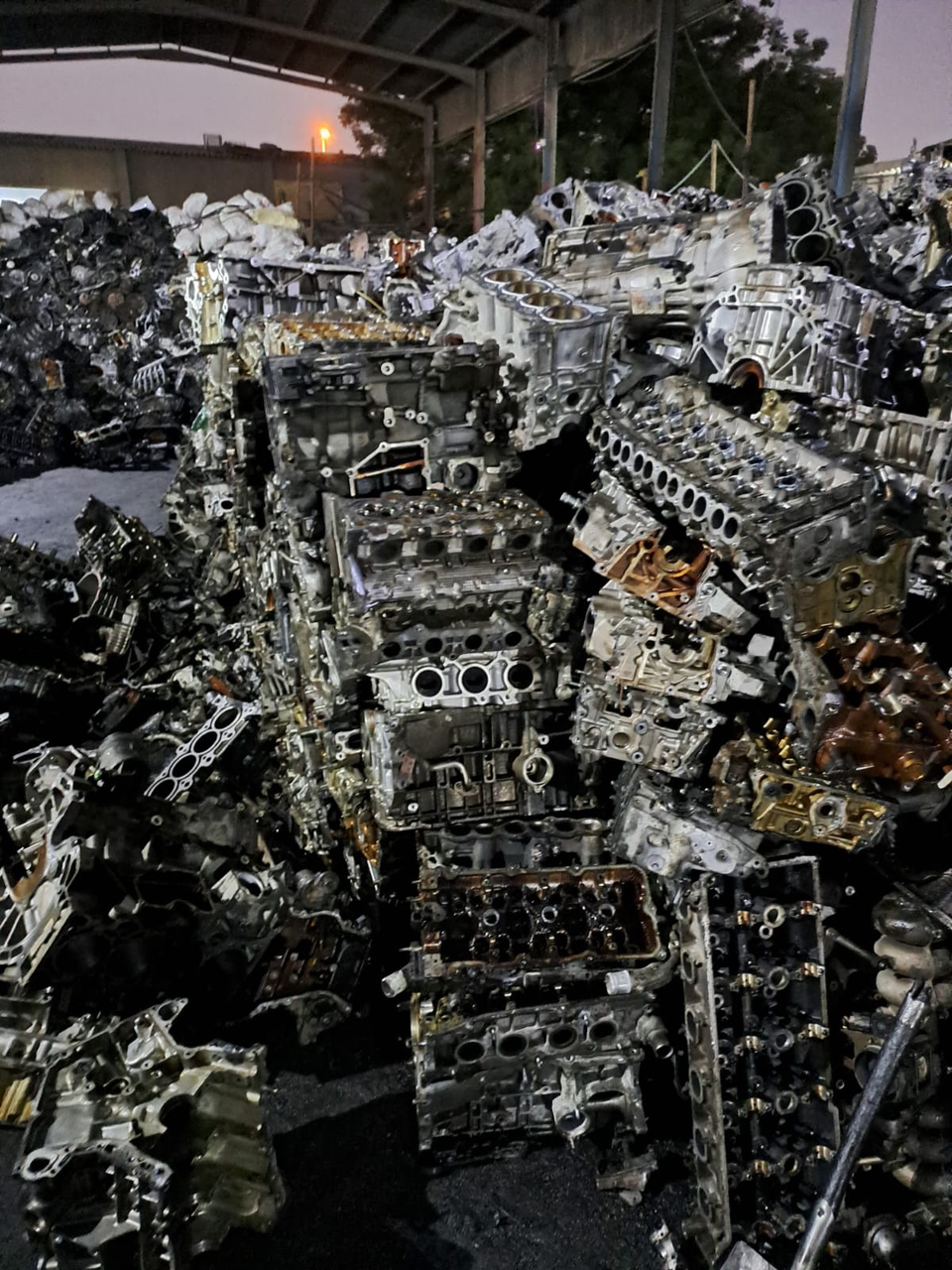
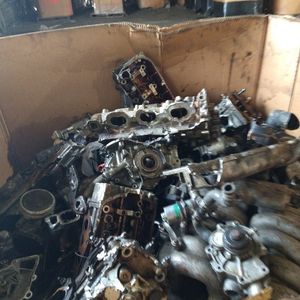
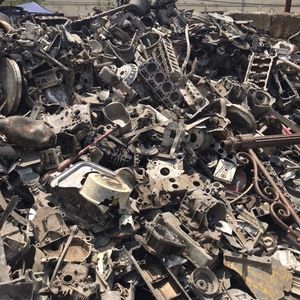
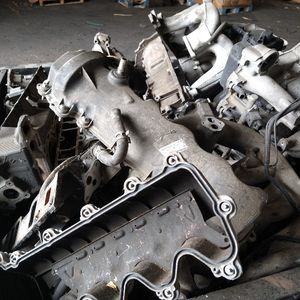
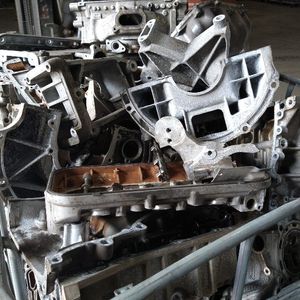
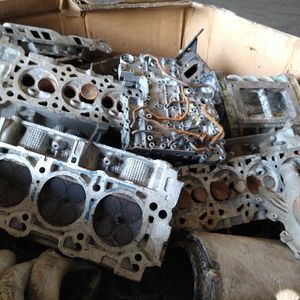
Cast-aluminum motor shell-dirty

Scrap Wiki

Common aluminum scrap from engine housings usually originates from automotive engines, with rare exceptions such as airplane or ship engines, which need to be specifically noted.
The outer casings of automotive engines are predominantly made from aluminum alloys, with a smaller portion made of cast iron. In recent years, aluminum engines have increasingly dominated the market due to their lightweight properties. The primary materials for aluminum engines are A380 and A356, ADC12. These materials share the advantage of good casting properties, high resistance to high temperatures and pressures, as well as excellent thermal conductivity and expansion coefficients. The metal recovery rate for aluminum engine castings, when free of impurities and new, is 97% to 98%.
ADC12, also known as A383 aluminum alloy, is the most common material for aluminum engine housings. It is chosen for its balance of production efficiency and cost-effectiveness, widely used in mass-produced, economical vehicles. It typically contains between 9.6% and 12% silicon, 1.5% to 3.5% copper, with iron content not exceeding 0.9%, and may contain traces of magnesium and zinc. ADC12 is suitable for casting complex shapes and thin-walled products.
A380 aluminum alloy is another common aluminum alloy for engine materials, primarily used for die casting. This alloy is a popular choice for manufacturing engine housings because it combines good casting characteristics, high strength, and lower cost. A380 alloy contains 7.5% to 9.5% silicon, 3.0% to 4.0% copper, and a certain proportion of magnesium, iron, nickel, and zinc.
A356 aluminum alloy has very good casting properties, combined with high strength and excellent corrosion resistance, making A356 suitable for engine components that need to withstand high pressures and temperatures, such as high-performance automotive or aerospace engine applications. It usually contains 6.5% to 7.5% silicon and 0.2% to 0.6% magnesium. Additionally, it may contain traces of iron, copper, and zinc. A356.2, the secondary remelt of A356, by removing impurities and gases in the metal, can further improve the mechanical properties and casting characteristics of the casting. A356.2 generally has higher purity and better mechanical and processing properties compared to A356.
When the above aluminum alloy engines become scrap or are rejected due to defects, they turn into aluminum scrap from engine housings. It is noteworthy that a complete, undismantled automotive engine usually includes a transmission. It contains a large amount of cast iron, manganese steel, rubber, and other impurities besides aluminum. Due to its complex structure and high impurity content, it requires significant manual labor for disassembly and sorting, making it a common type of scrap that requires heavy manual handling. The "aluminum engine housing scrap" mentioned here generally refers to scrap that consists entirely of dismantled aluminum engine housings after processing. Only after this process, can an aluminum engine housing become aluminum scrap for transaction and utilization.
The corresponding American ISRI name is "Trump," defined as: all clean, sized automotive aluminum castings, free of iron, dirt, brass, bushings, and non-metallic items. Grease does not exceed 2%.
The image below is a diagram of an aluminum engine.
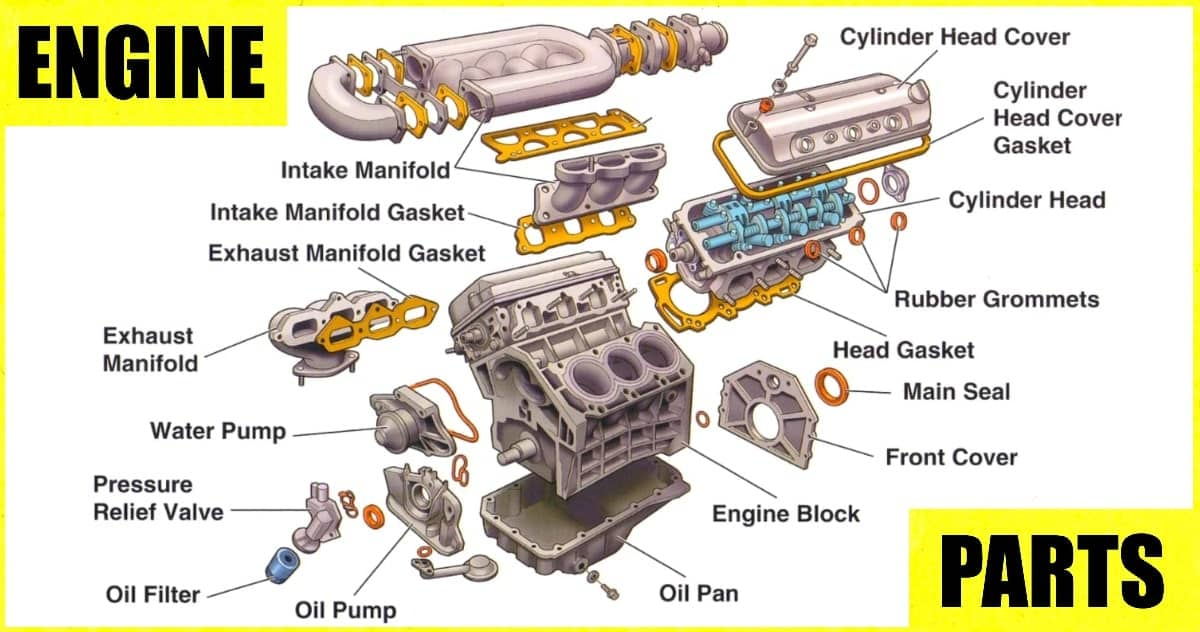
Aluminum Engine Structure Diagram

Common Classification

Aluminum scrap from engine housings is often classified according to the level of impurities it contains, such as clean/2% impurities/5% impurities/8% impurities, etc. Generally, the impurity rate of completely disassembled aluminum engine housings is less than 2%, while those with a visible large number of residual iron screws have an impurity rate generally above 8%. If stainless steel cylinder liners and bearings are present, the impurity rate can exceed 15% and even reach 30%.
Aluminum scrap from engine housings can be subdivided into:
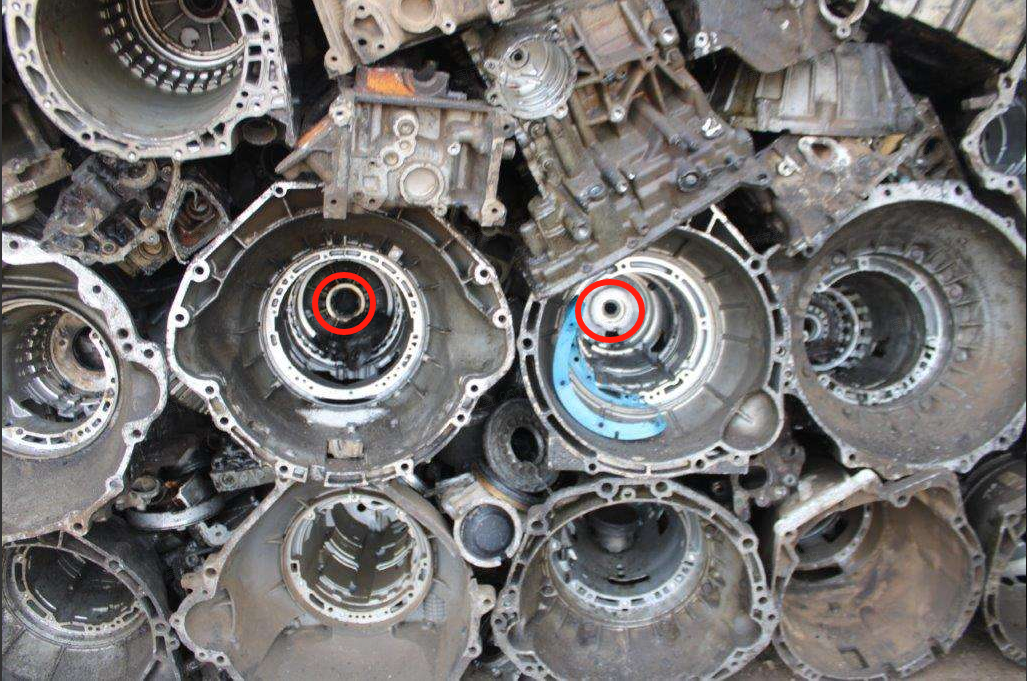
1. Transmission shells. These are typically pure aluminum shells, with almost no impurities except for the sleeve section, as shown in the image below.

Transmission with Iron
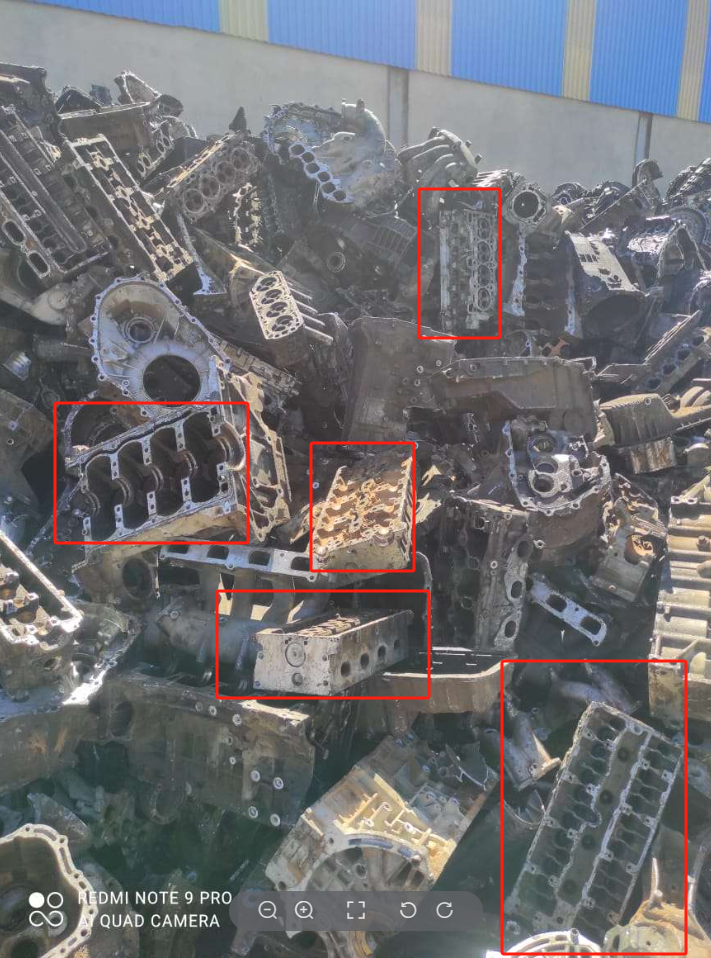
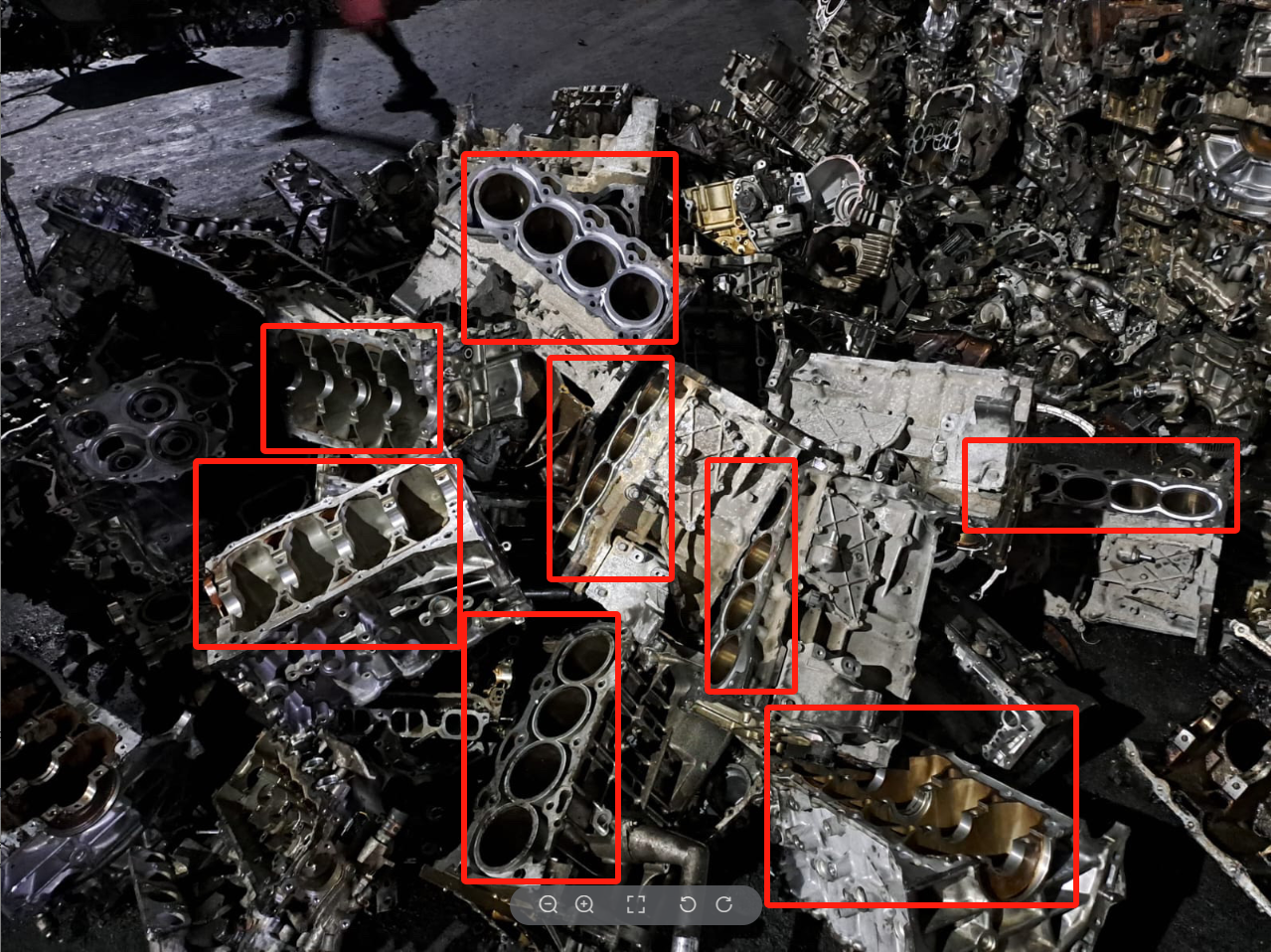
  1. Cylinder (middle cylinder) shells, where cylinder liners are often steel, and the overall impurity content is high. The middle cylinder is the main item, with impurities over 15%, as shown in the image below.
Transmission with Iron
  1. Cylinder heads (cylinder heads), which contain a large amount of steel and iron, have the most impurities, with impurities ranging from 20% to 30%. This does not meet the definition of Trump and can easily lead to disputes.
Transmission with Iron

Common Sources

Aluminum scrap from engine housings comes from the disassembly of automotive engines or defective engine parts during the manufacturing process of automotive engines. Therefore, these scrap materials are often associated with the automotive industry.
Firstly, they come from auto repair shops, scrap yards, and dismantling plants. When automotive engines are damaged or reach the end of their life, these facilities typically handle the scrap in a centralized manner. There are also specialized scrap dealers or suppliers responsible for dismantling entire engines, who specifically sell relatively clean aluminum engine housings after they have been dismantled and processed.
Furthermore, defective products from engine manufacturers that are discarded are also a significant source of this type of scrap. It should be noted that some aluminum engine housings that have been scrapped may have steel components installed, such as piston sleeves and shaft sleeves, and some may even have been assembled with gears that contain hard stainless steel bearings. A strict inspection is required.

Value Points

In general, the value of aluminum engine housing scrap is: transmission shell > cylinder (middle cylinder) > cylinder head (cylinder head). The more round transmission aluminum shells, the better; the fewer cylinder shells, the better. Carefully inspect for any residual sleeve and bearing components.

Processing Methods

  1. Manual disassembly
    For aluminum engine housing scrap with impurities, different downstream buyers have different tolerances for impurity content and special conditions (such as iron impurities). For buyers with strict impurity requirements, further manual disassembly is needed to remove iron screws, stainless steel sleeves, bearings, and other components as thoroughly as possible.
  2. Mechanical crushing
    When dealing with large volumes of goods and where quality control is extremely strict regarding impurities, mechanical crushing can often replace manual disassembly. The advantage of mechanically crushing aluminum engine scrap lies in high efficiency; compared to manual disassembly, a large volume of aluminum engine housing scrap can be processed within a unit of time. For components difficult to remove manually, such as sleeves and cylinder liners, sorting after crushing can remove as much as possible. However, similar to all mechanical crushing, there is material loss during the crushing process, approximately 1-2% of the material is consumed during crushing.
  3. Furnace use
    Some processing plants will directly melt uncleanly disassembled aluminum engine scrap containing iron in the furnace and skim off iron and slag at the furnace bottom. The advantage is a reduction in the labor and cost of disassembly and impurity removal, but the downside is quite significant. Impurities form slag at the bottom of the furnace, which also adsorbs aluminum, resulting in material waste. Around 2% of the material is lost due to adsorption. Additionally, regularly stopping the furnace to skim iron impacts production efficiency.

Detection Methods

The common detection methods for aluminum scrap from engine housings primarily target the content of iron impurities. The detection method is random sampling inspection. A random sample of scrap, usually 100-500kg, is taken and sorted to obtain iron impurities and calculate the ratio. Alternatively, iron content can be calculated after directly melting and skimming iron from the furnace.

Matching Direction

Aluminum scrap from engine housings is suitable for aluminum ingot manufacturers that produce die-cast aluminum ingots like ADC12 and A356, allowing for the best utilization and saving significantly on the cost of producing ADC12. The factory should have a certain pre-processing capability, such as manually disassembling iron-containing aluminum engines. Some factories with strict quality standards that specifically use aluminum engine housing scrap may be equipped with special crushing and sorting equipment to remove as much iron impurities as possible during the pre-processing phase, reducing the iron content in the product.

Special Attention

The proportion of impurities in the middle cylinder (cylinder) is high. Inside the middle cylinder are a large number of hard stainless steel sleeves with high manganese content, closely connected to the cylinder body structure, which are very difficult to remove without mechanical crushing.
For aluminum engine housings (Trump) this type of scrap, it has a relatively high probability of problems during transactions. In the transaction process, rigorously review the images provided. Be vigilant about non-spot physical images provided by suppliers. While requiring suppliers to guarantee the impurity rate, it is best to provide clear, detailed spot photos during container loading. If any abnormalities are found, immediate feedback should be given to the buyer, and transactions should be terminated in cases of severe discrepancies. As shown below, the more middle cylinder (cylinder) shells there are, the more stainless steel impurities there may be.

Transmission with Iron

Gallery

Cast-aluminum motor shell-dirty
Back to Parent Category