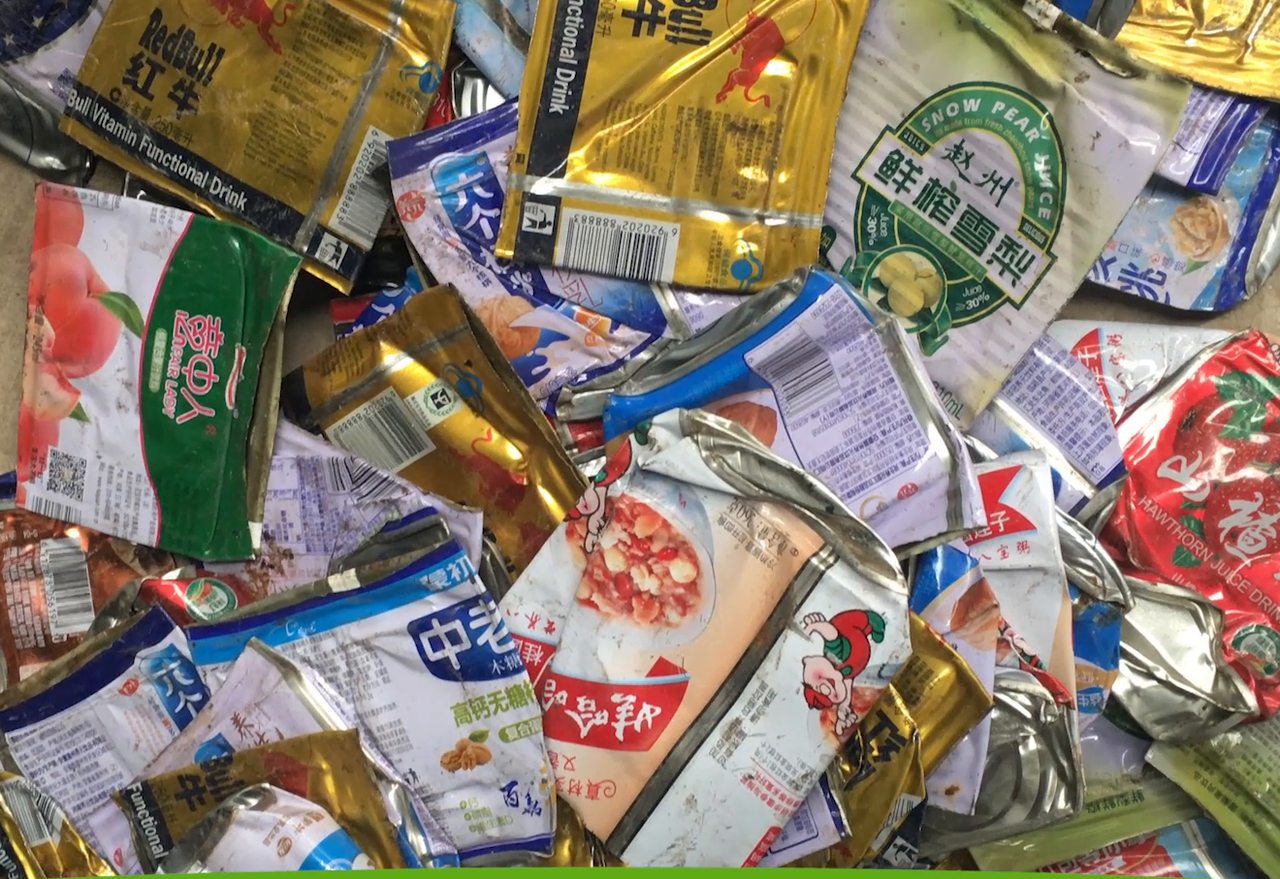
Painted UBC

Scrap Wiki

Aluminum cans are lightweight, airtight, and corrosion-resistant packaging containers. They are made of high-strength aluminum alloys that can withstand high pressure, making them suitable for storing carbonated beverages.
The most common aluminum cans are made from two different types of aluminum alloys: the can body is usually made from 3004/3104 aluminum alloy, while the can lid is usually made from 5182/5052 aluminum alloy. The pull ring is usually made from 5182 aluminum alloy. The 3004/3104 aluminum alloy has good formability, corrosion resistance, and weldability, making it suitable for producing can bodies. The 5182/5052 aluminum alloy has good strength and corrosion resistance, making it suitable for producing can lids.

Easy-pull can pull ring is usually 5182

These two aluminum alloys undergo a series of processing steps, including cleaning, coating, printing, and shaping, to become the aluminum cans we commonly use. This packaging method is convenient, hygienic, and environmentally friendly, as aluminum can be recycled. In recent years, with the development of circular economy and recycling economy, aluminum cans have become an important source of recycled aluminum worldwide. In 2022, the global recycling value of aluminum cans was approximately $5.144 billion, and it is expected to reach $6.911 billion by 2029, with a compound annual growth rate of 4.3% from 2023 to 2029.

Common aluminum can waste

Aluminum cans that have not undergone the paint removal process are called painted aluminum cans. Most aluminum cans on the market are painted aluminum cans.

Common Classification

The melting and recycling rate of painted aluminum cans is highly dependent on the grade of the waste. The following is a general classification:
1. First-grade UBC waste: This is the cleanest and purest form of UBC waste, with the highest melting and recycling rate, reaching around 97%. It is usually collected from large supermarkets and processed uniformly, with almost all aluminum being recyclable.
2. Second-grade UBC waste: This type of waste has minor impurities, oxidation, or other metals, such as occasional iron cans. This grade of waste is usually sorted by experienced workers. The melting and recycling rate of this grade is slightly lower.
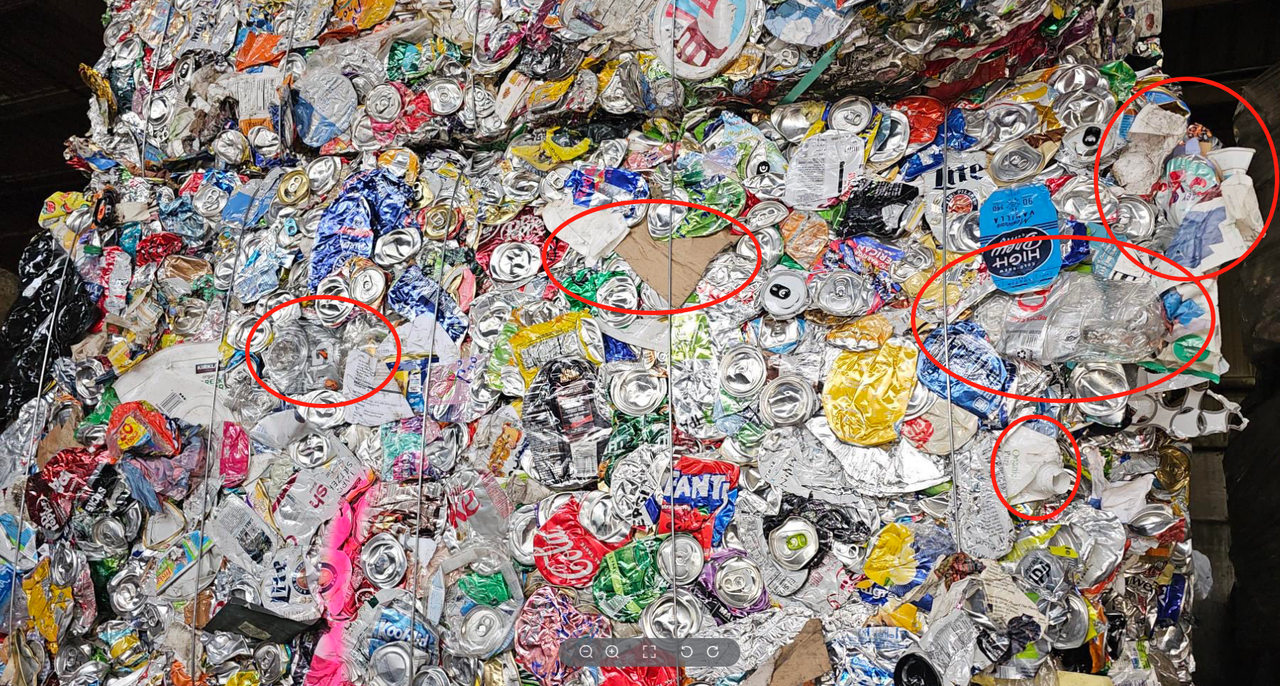
3. Third-grade UBC waste: This type of waste has a large amount of impurities, including plastic bottles and other materials. The sorting degree of this grade is low, and the melting and recycling rate is the lowest. Some waste may require additional processing to separate impurities before melting and recycling.
Specialized equipment, such as dual-chamber furnaces, can significantly improve the metal recovery rate of painted aluminum cans.

Common Sources

The sources of aluminum cans and aluminum can waste are mainly divided into two categories: factory waste and household waste.
Factory waste is mainly composed of defective products, which are usually unpainted and of high quality, and can be fully utilized. Some have undergone the coating process and are painted aluminum cans, which need to be processed to remove the paint before use.
Household waste generates a large amount of aluminum can waste, also known as used beverage cans (UBCs). The amount of aluminum can waste generated is affected by several factors, including population density, living standards, and climate type.
The recycling rate of aluminum cans is the highest among all types of metal waste worldwide. For example, in China, 98% of aluminum cans are recycled, which is one of the highest rates globally. However, most aluminum cans are downcycled after recycling, and there is still much room for improvement.

Value Points

The value of painted aluminum cans lies in their purity. The classification above divides aluminum cans into three grades based on their impurity content. First-grade UBC waste can be used directly as industrial-grade waste. Second-grade and third-grade waste have lower values, but after paint removal, crushing, and processing, the impurity content can be reduced, and the waste can be used to produce 3-series and 5-series aluminum alloys.

Processing Methods

The common processing methods for aluminum cans include:
1. Collection and sorting: Aluminum cans are collected and sorted, and iron cans, plastic bottles, and other impurities are removed through manual or mechanical sorting.
2. Cleaning and paint removal: Collected aluminum cans are cleaned to remove oil, beverage residue, and other impurities. This step is not necessary, as cleaning can also increase the water content of the aluminum cans, affecting their quality. Paint removal is a processing method that can improve the quality of aluminum cans. There are chemical paint removal, thermal paint removal, and mechanical paint removal methods.
3. Compression: Cleaned aluminum cans are compressed into blocks to facilitate transportation and storage.
4. Melting: Compressed aluminum cans are sent to a melting furnace, where aluminum is extracted through high-temperature melting. The melting process usually uses a rotary furnace, crucible furnace, or electric resistance furnace. To ensure uniform feeding of aluminum cans into the melting furnace, equipment such as conveyor belts, hoppers, and feeding machines are used. During the melting process, chemical additives may be added to remove impurities and improve the purity of aluminum.

Detection Methods

The detection of aluminum can waste usually uses metal recovery rate as the standard. The detection method is mainly sampling + crucible melting. Metal recovery rate = actual aluminum quality obtained from crucible melting ÷ total sampling quality.
If the impurity content needs to be detected, sampling + manual sorting can be performed, and the impurity content can be calculated.

Matching Direction

Aluminum cans and other aluminum can waste are first considered for high-value utilization, making them suitable for matching with aluminum rolling mills that provide raw materials for aluminum cans. In recent years, with the global promotion of the dual-carbon policy, many aluminum can users, such as Budweiser and Pepsi, have required a significant increase in the use of recycled aluminum alloys in the production of aluminum cans.
Secondly, aluminum cans can be matched with automobile aluminum alloy factories. 3-series and 5-series aluminum alloys are also widely used in automobile manufacturing, especially in the production of new energy vehicles, which have increased the use of aluminum.
If the impurity content is high, and high-value utilization is difficult and costly, aluminum cans can be matched with melting furnaces that produce aluminum ingots. Due to policy reasons, such as China's ban on the importation of aluminum can waste, a large amount of aluminum cans are sent to countries like Thailand and Malaysia for processing into aluminum ingots that meet China's import standards, and then re-imported into China.

Special Attention

  1. Be aware of iron cans
    Iron cans can be distinguished by their rust spots. It is essential to carefully identify and separate iron cans from aluminum cans.
  2. Be aware of packaged aluminum can waste
    Be cautious of packaged aluminum can waste that may contain other impurities, such as iron blocks or bricks. It is recommended to have videos of the packaging process and to inspect the waste before purchasing.
  3. Be aware of the contents of aluminum cans
    Be aware of the residual beverage and maliciously inserted materials, such as wet paper or mud, inside the aluminum cans. In severe cases, this can be considered commercial fraud. Currently, there is no effective way to avoid such situations, and it is recommended to purchase small quantities of aluminum can waste from unfamiliar suppliers or conduct on-site inspections.
A large number of iron cans mixed into aluminum can waste

Gallery

Painted UBC
Painted UBC
Painted UBC
Painted UBC
Painted UBC
Painted UBC
Painted UBC
Back to Parent Category